
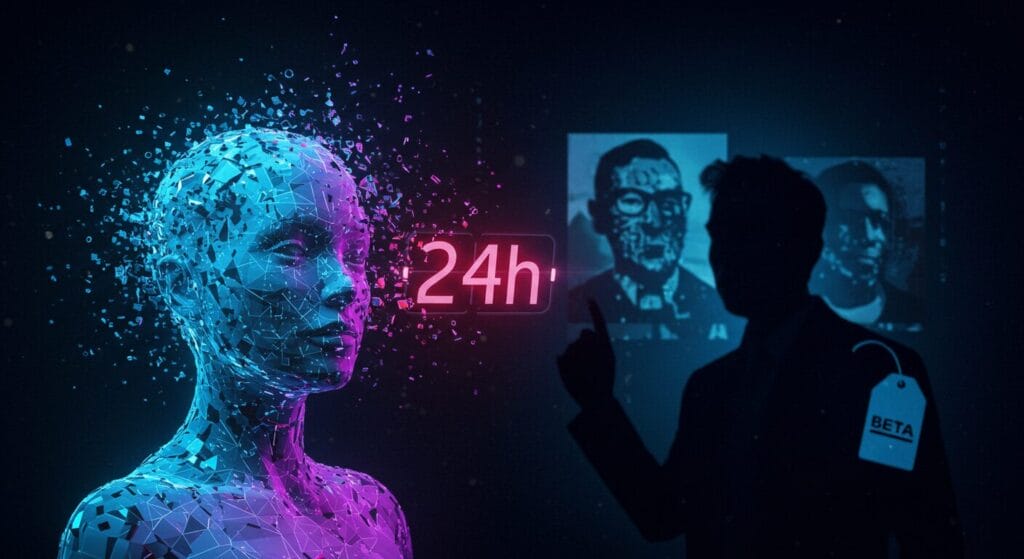
Aurora is the advanced visual generation and understanding model developed by xAI, designed to radically transform Grok’s creative and multimodal capabilities on the X platform and through its professional API.
Initially released in late 2024 and progressively optimized alongside advancements in the Grok family, Aurora represents Elon Musk and the xAI team’s direct response to industry giants such as Midjourney, OpenAI’s DALL-E 3, and Black Forest Labs’ Flux. Its architecture combines massive training with trillions of visual parameters, delivering astonishing photographic fidelity and meticulous adherence to textual cues.
What is Aurora and what role does it play in the xAI ecosystem?
Within the xAI strategy, Grok acts as the cognitive and conversational brain, while Aurora operates as the comprehensive visual engine. Unlike early versions of Grok that relied exclusively on external integrations with third parties, Aurora was designed in-house to provide ultra-fast, consistent image generation tightly linked to real-time information.
Extreme Photorealism
It excels at accurately reproducing human skin textures, complex volumetric lighting, reflections, natural shadows and anatomical details without extraneous artifacts.
Typography and Logos
It solves one of the biggest headaches of generative AI: it is capable of rendering signs, calligraphy and typography perfectly legible and integrated into the scene.
Aurora Key Capabilities
- Generation from natural language (Text-to-Image): Interprets complex indications with multiple subjects, artistic styles (oil, watercolor, 3D rendering, analog film) and photographic parameters (anamorphic lenses, f/1.4 aperture, macro photography).
- Editing and transformation by instructions (Image-to-Image / Inpainting): Allows you to adjust specific elements of a pre-existing image with simple text instructions, such as altering the color palette, replacing clothing or modifying the weather environment.
- Balanced creative moderation policy: Following Elon Musk’s philosophy on creative freedom, Aurora maintains a less restrictive stance than competitors like DALL-E, allowing greater expressive range for creators and designers, without neglecting basic legal safeguards.
- Computing speed on Colossus: Backed by the infrastructure of the Colossus supercomputing cluster in Memphis (with more than 100,000 NVIDIA H100 GPUs), Aurora synthesizes high-definition images in just seconds.
Comparison: Aurora versus DALL-E 3, Midjourney and Flux
| Feature | Aurora (xAI) | Midjourney v6 | DALL-E 3 (OpenAI) | Flux.1 (BFL) |
|---|---|---|---|---|
| Main platform | Grok (X) and xAI API | Discord / Web | ChatGPT and OpenAI API | Open Source / Fal.ai / Replicate |
| Typographical precision | Excellent | Good/Average | Very good | Excellent |
| Photorealism | Very High | Exceptional | Medium (digital style) | Exceptional |
| Generation speed | Ultra-fast (< 4 sec) | Moderate (20-40 sec) | Moderate (15-25 sec) | Quick |
| Filters and restrictions | Flexible moderation | Medium moderation | Very restrictive | Minimums (depending on version) |
How to try and use Aurora?
Currently, users can access Aurora’s visual generation capabilities in two main ways:
- Through subscriptions on
- xAI API for Developers: For businesses and developers who want to integrate real-time imaging within their applications, web platforms, or design workflows.
Explore more about the xAI ecosystem: Discover all the details about models, deep reasoning capabilities and subscription options in our complete guide to the main pillar: Grok de xAI: models, functionalities and prices.
Cet article est également disponible en :