
CYBERSECURITY, FRAUD & DIGITAL PROTECTION
Dangers and Threats of Artificial Intelligence: The Prevention and Cybersecurity Guide
AI not only transforms productivity: it has ushered in an era of precision cybercrime, biometric identity fraud, vulnerable code, and critical operational risks that we need to be prepared for.
The real threat from artificial intelligence is not a science fiction rebellion, but hyper-realistic crime, mass misinformation and automated human error. From organized gangs cloning familiar voices in minutes to financial directors fooled by video calls with synthetic avatars, the risk is tangible and economical. This practical guide analyzes the main current threats and the protocols necessary to protect your company, your finances and your family environment.
🎭
Impersonation and Social Engineering
Deepfakes in real-time video, voice cloning of managers (CEO Fraud) and organized romance scams (Pig Butchering).
⚡
Operational Risks and Unsafe Code
The hidden cost of unsupervised vibecoding, fiscal or contractual hallucinations and out-of-control autonomous agents.
🛡️
Social and Family Vulnerability
Minors with emotional dependence on confident chatbots, the elderly exposed to visual falsifications and the European regulatory framework.
1. Cybercrime, Deepfakes and Identity Theft
Generative artificial intelligence has pulverized the classic principle that “seeing and hearing is believing.” Biometric cloning and synthetic scripts enable surgically precise deception of both individuals and large corporations.
 SOCIAL ENGINEERING & NETWORKS
Do you think she’s pretty? How faces are recruited for AI scams
The capture of identities and the exploitation of Pig Butchering: organized networks that use synthetic faces for sentimental scams and trap investments.
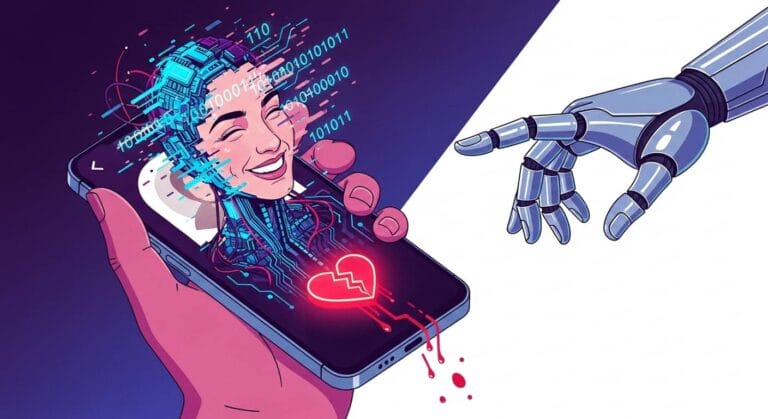 FRAUDE AFECTIVO
Valentine’s Day and AI: When the algorithm breaks your heart
LLM-assisted affective manipulation techniques to generate artificial trust, feign intimate empathy and empty bank accounts.
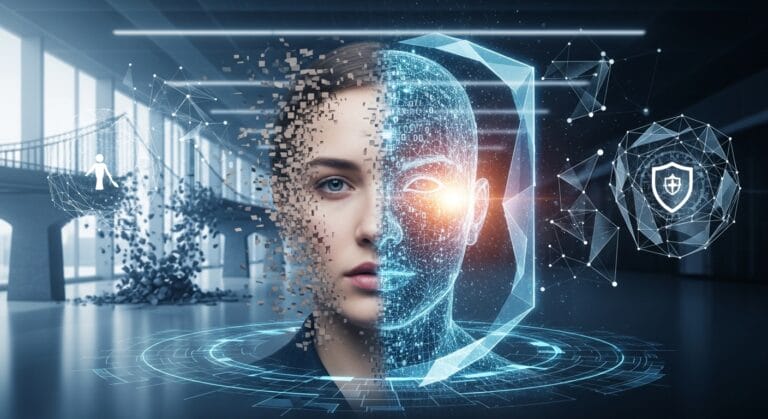 CIBERDEFENSA CORPORATIVA
Identity crisis: Shielding against Deepfakes
Internal verification protocols, safe words and measures to prevent management from being impersonated in operational video calls.
 FRAUDE DEL CEO
Deepfake in companies: Risk to trust and capital
Real cases of million-dollar transfers authorized by false directors and how to redesign financial authorization flows.
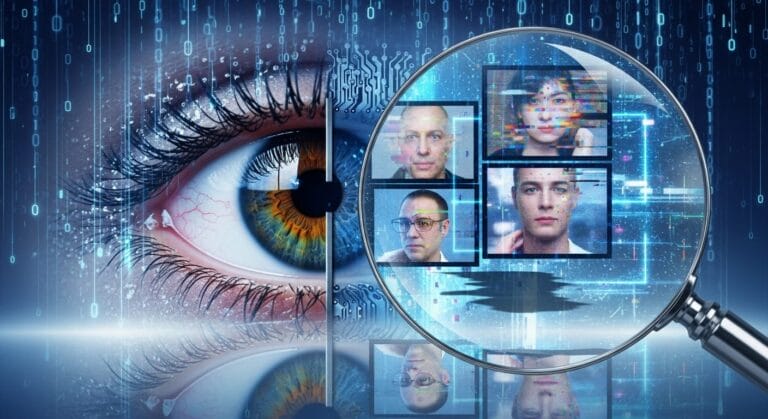 FORENSIC ANALYSIS
Practical guide: How to detect deepfakes in video
Critical visual cues: blink inconsistency, tooth shadow mismatches, facial edge distortions, and acoustic aberrations.
Special Monograph: Deepfakes, Tools, Detection and Risks
It delves into the underlying technology, facial synthesis software, video generators and specialized forensic tools for enterprises.
2. Operational Risks, Unsafe Code and Critical Hallucinations
Blindly trusting the output of a language model or deploying autonomous agents without guardrails can lead to legal penalties, fiscal disasters, and code riddled with vulnerabilities.
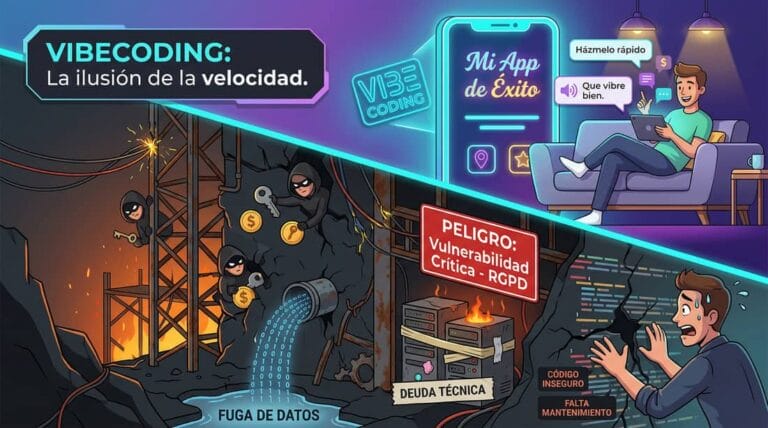 DESARROLLO & CIBERSEGURIDAD
The hidden cost of vibecoding: Cheap code that is very expensive
Programming based on prompts without understanding the architecture generates invisible technical debt, crazy libraries and vulnerable code injections.
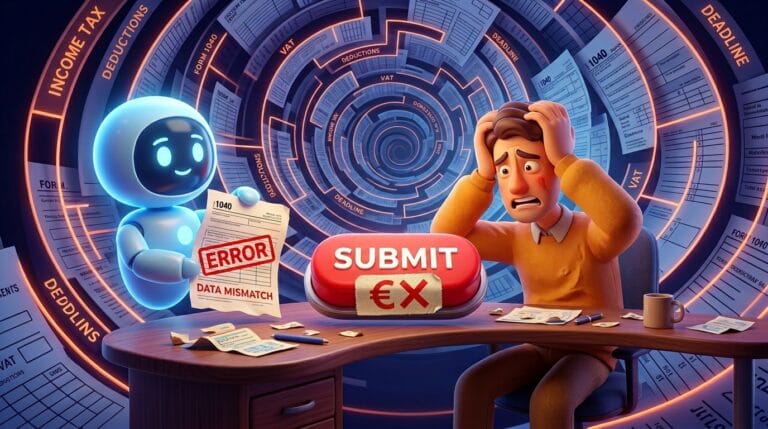 RESPONSABILIDAD FISCAL
The €1,000 mistake: Using ChatGPT for taxes is dangerous
Hallucinations in deductions and tax regulations: The Treasury penalizes the taxpayer, not the algorithm that wrote the response.
 GOBERNANZA DE AGENTES
Agentic AI: When the assistant takes charge (and spends money)
What happens when we grant execution permits and credit cards to autonomous agents without rigorous guardrails.
3. Minors, Elders and Vulnerable Groups: The Emotional Gap
The most sensitive groups suffer the side effects of AI: from emotional attachment and psychological dependence in minors to misinformation manipulation through synthetic images in older people.
 PSYCHOLOGY & MINORS
Goodbye to the imaginary friend? AI as a child’s confidant
The risks of infant parasocial attachment to synthetic peers: Loss of human social skills, isolation, and privacy exposure.
 DISINFORMATION & SENIORS
Why the elderly do not differentiate AI images from real ones
The rise of AI Slop and the exploitation of emotional biases in older people: pedagogical keys to prevent visual deception on social networks.
 REGULATION & PILLAR PAGE
Laws and AI: The Regulatory Framework and Legal Protection
The European AI Law (AI Act), unacceptable risk levels, sanctions for illicit use of biometric data and civil liability of brands.
4. Self-Protection Decalogue: Protocols for Families and Companies
Against algorithmic cybercrime, the best defense combines rigorous human procedures with preventive technical filters.
1. Offline Security Keyword
Establishes a verbal and non-transferable secret code in the family and management committees to verify calls of alleged economic urgency or virtual kidnappings.
2. Dual Channel for Financial Operations
No transfer above a preset threshold should be executed by email or chat request without direct telephone or in-person confirmation.
3. Veto of Confidential Information in the Cloud
Prohibit your teams from pasting proprietary code snippets, databases, or contracts into free web versions of LLMs without enterprise non-training agreements.
4. Forensic Control in “Vibe Coding”
All AI-generated code must go through static security review, package analysis in open repositories, and validation by a senior developer.
Are you worried about Digital Security or the Use of AI in your Company?
At ComunicaGenia we audit corporate processes, draft internal artificial intelligence governance policies and train teams to protect their reputation, data and capital against synthetic fraud.
This post is also available in: