
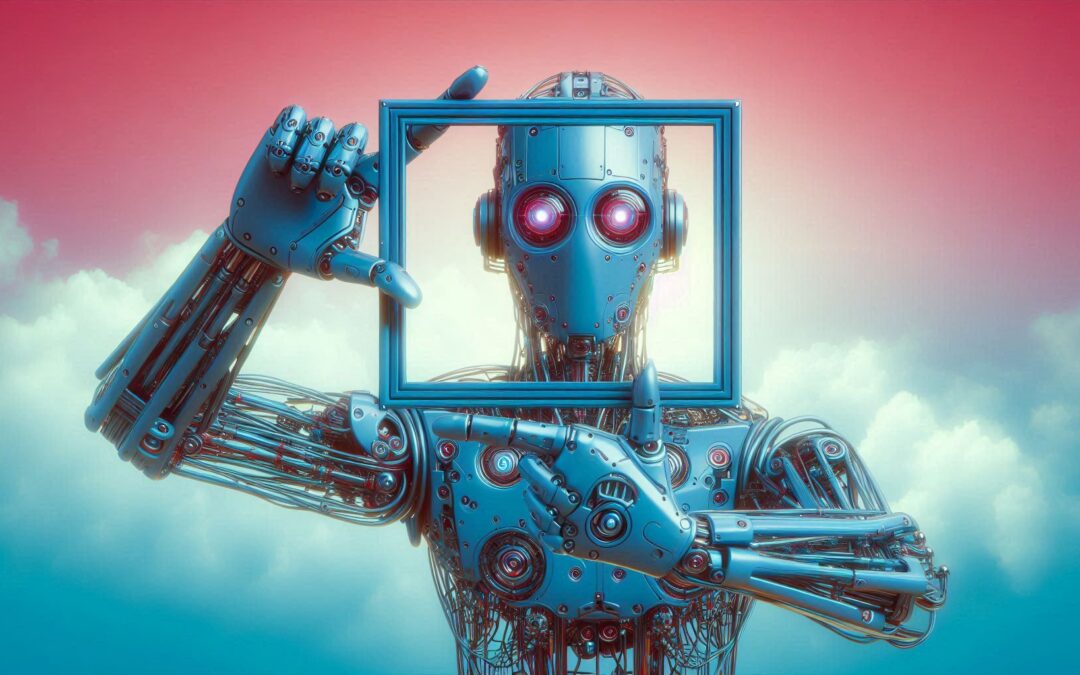
Have you ever seen a face in the foam of your coffee or on the bark of a tree? This phenomenon, known as pareidolia, is something we experience every day: the ability to see patterns, especially faces, in inanimate objects.
This human tendency is so common that we have even found faces in sandwiches and clouds. However, for a machine, this type of recognition is a considerable challenge.
Recently, a team of MIT researchers developed a project to train algorithms to detect “faces” on objects, like humans do.
Learn in detail about the work of these researchers, which not only reveals fascinating details about how we process images, but also the advances and limits of artificial intelligence in its attempt to understand the world as we do.
What is pareidolia and why is it important?
Pareidolia is the psychological phenomenon that leads us to see familiar faces or patterns in inanimate objects, such as finding “faces” in clouds or figures in stains on a wall.
From an evolutionary perspective, pareidolia may have represented a crucial advantage. Our ancestors surely benefited from being able to detect faces in their environment, something useful for identifying other humans or perceiving lurking predators.
The importance of studying pareidolia is not limited to human psychology. In the field of artificial intelligence, understanding how humans recognize these patterns allows for improved computer vision algorithms.
Replicating this phenomenon in AIs not only helps create more accurate algorithms, but could also lead to practical applications, such as reducing errors in facial recognition and improving interaction between humans and machines.
Challenges of AI in the reconstruction of human perception
While humans almost instantaneously interpret faces and patterns in their environment, AI algorithms face limitations when attempting to replicate this ability.
The main reason is that algorithms are based on statistical pattern recognition, while human perception goes further: it is influenced by experience, evolution and emotional contexts.
Face detection in AI is designed to identify defined features in a real face, but when presented with an inanimate object with vaguely similar features, most of these systems fail.
Furthermore, these algorithms typically classify visual patterns into rigid categories and do not have the perceptual flexibility that humans naturally employ.
And AI needs large amounts of data to be able to generalize. For this reason, a team of MIT researchers made their corresponding contribution regarding AI and pareidolia.
The MIT “Faces in Things” project
A team of MIT researchers collected and labeled an extensive collection of images, known as the “Faces in Things” dataset, containing more than 5,000 examples of pareidolia.
This is, to date, the largest collection of images of its kind and was created specifically to study the differences between human perception and that of algorithms.
One of the most surprising discoveries was that AI algorithms achieved better results in detecting faces in inanimate objects after being trained with images of animal faces.
Additionally, the researchers identified a “Goldilocks zone” of visual complexity in which both humans and algorithms are more likely to detect these illusory faces.
The team also developed a mathematical model to describe the probability of detecting faces in different types of images, allowing us to predict in which contexts pareidolia is most common.
Potential applications of pareidolia in AI
The ability to detect faces in inanimate objects, as occurs with pareidolia, has promising practical applications in artificial intelligence:
Designing friendlier products
In areas such as product design, this phenomenon could be exploited to make certain objects look friendlier or more accessible.
For example, designing a car or toy with visual features that evoke a “friendly face” could improve the user’s experience and emotional connection to the product.
Reduction of false positives in facial recognition
AI’s ability to recognize pareidolic patterns could also reduce false positives in facial recognition systems, which is crucial in fields such as security and identification technology in public spaces.
More natural human-computer interaction
In robotics, incorporating pareidolia detection models could allow machines to respond more humanely and empathetically to users by recognizing when certain objects seem to “express” emotions.
Applications in the medical field
In medical areas, where devices and tools must be visually accessible and calming, understanding pareidolia could help prevent certain designs from generating negative responses in patients.
Future of visual recognition in AI
As advances in artificial intelligence continue, the study of phenomena such as pareidolia may be key to improving the way machines perceive their environment.
The ability to recognize patterns in a more flexible and human way opens up new possibilities in product design, interaction with technology and precision in visual recognition systems.
The MIT work is just the beginning of a line of research that, in the future, will allow AIs to interpret images with a deeper understanding, not only analyzing the obvious, but also capturing the subjective and ambiguous.
With these advances, AI visual recognition will get closer to human perception, transforming your ability to interact with the world and offering more intuitive and effective applications.
This post is also available in: