
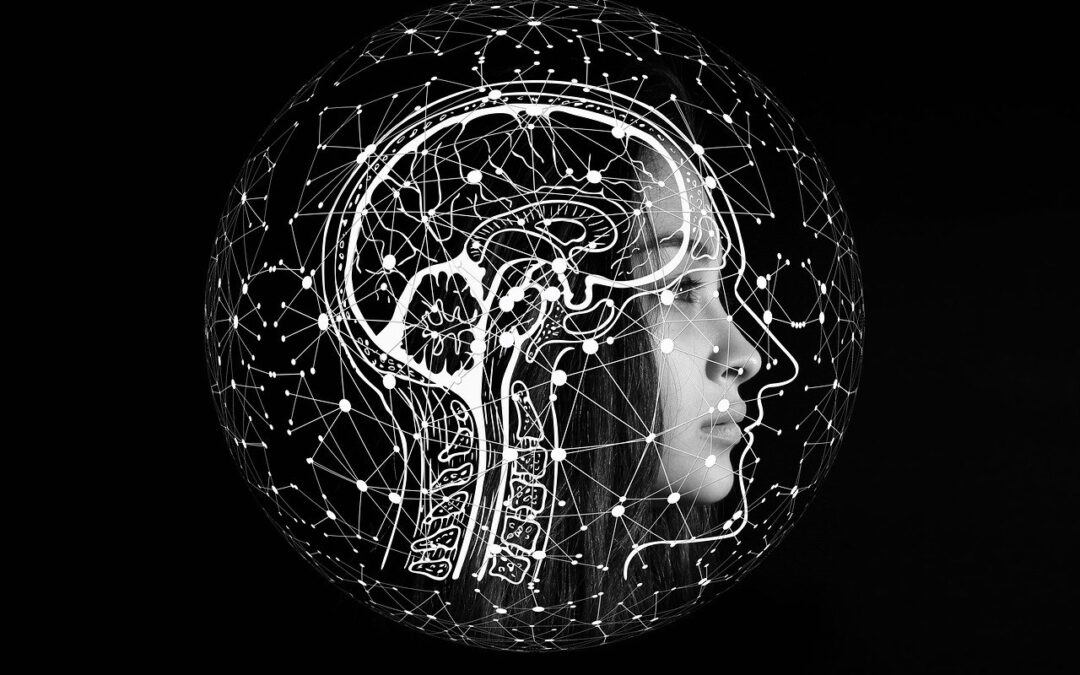
In science and technology, artificial intelligence has emerged as a revolutionary force that has redefined the way we live, work and relate.
From its conception in the minds of visionaries to its constant presence in everyday life, the relationship between education and Artificial Intelligence has gone from being an implausible idea to a palpable reality that drives progress on numerous fronts.
However, does artificial intelligence represent a before and after in history? Learn in detail the impact that artificial intelligence has had on modern society.
From its modest beginnings to its advanced applications, discover how AI has changed the way we interact with technology, how we solve problems, and imagine the future.
What is artificial intelligence and how does it arise?
It is a field of computer science that focuses on creating systems capable of performing tasks that require human intelligence. AIs can learn, reason, plan, perceive, recognize patterns and make decisions autonomously.
The concept of artificial intelligence emerged in the 1950s. During these early years, they focused on the development of programs capable of imitating basic human skills, such as chess or solving simple mathematical problems.
As research progressed, new techniques and approaches were developed, such as machine learning and artificial neural networks.
Today AIs are very present in our daily lives, both in search engines and in smartphone assistants. Its evolution continues to challenge the limits of what is possible and promises to further transform the world in the future.
Applications of Artificial Intelligence in different areas
Artificial intelligence (AI) has found applications in a wide range of areas. Some of the areas where AI is making its mark are:
- Business: AI is used to optimize processes, improve decision making and increase efficiency. From supply chain management to data analysis to identify market opportunities, AI helps companies become more competitive and adaptive.
- Health: From AI-assisted diagnostic systems to surgical robots, AI is improving the accuracy and effectiveness of health services, saving lives and improving the quality of life of patients.
- Financial: AI algorithms can analyze large volumes of financial data in real time, identify patterns and trends, and make informed decisions to maximize returns and minimize risks.
- Education: Intelligent tutoring systems can provide immediate and personalized feedback, helping students improve their academic performance.
- Transportation: AI algorithms can analyze real-time traffic data, predict congestion patterns, and optimize delivery routes to minimize travel times and operating costs.
Traditional trades vs Artificial Intelligence
The advent of artificial intelligence (AI) has posed challenges for numerous professions and jobs around the world. Many have lost their jobs due to the automation of tasks they previously performed, raising concerns about the future of employment.
However, instead of seeing AI as a threat, we must adopt a conciliatory perspective, where both people and machines work together harmoniously and productively.
To effectively adapt to AI, professions must be willing to acquire new skills and knowledge that allow them to collaborate effectively with AI.
Therefore, professions must integrate AI into their work processes, taking advantage of its capabilities to perform repetitive and analytical tasks, while the human factor focuses on activities that require creativity, intuition and empathy.
Education and preparation for the future of AI
Education and preparation for the future of artificial intelligence (AI) are essential to ensure a qualified workforce adaptable to technological advances.
Experts recommend integrating AI education at all levels of the education system, from primary education to vocational training, to teach basic concepts and practical skills related to AI.
Additionally, a mindset of continuous learning and adaptability must be encouraged among students and professionals. Collaboration between different fields of study is key, since AI has applications in various industries.
Along with technical training, socio-emotional skills such as creativity and critical thinking must be developed, which complement the capabilities of AI and allow professionals to work collaboratively.
Likewise, a culture of ethics and responsibility must be promoted in the development and use of AI, to ensure that it is used in a fair and equitable manner for the benefit of society.
Final Perspectives on the Evolution of AI
On the one hand, AI has revolutionized numerous industries, improving efficiency, productivity and innovation. It has facilitated more precise medical diagnoses, optimized resource management and enabled significant advances in scientific research.
However, it also poses challenges, such as job losses due to automation and concerns about data privacy and security.
To reap the benefits of AI and mitigate its risks, it is essential to promote ethical and responsible regulation that guarantees its equitable and transparent use.
Furthermore, it is important to foster collaboration between governments, companies, educational institutions and society in general to address the ethical, social and economic challenges associated with AI.
By adopting an approach that recognizes the benefits and risks of AI, and taking steps to manage them, we can harness its full potential to improve our lives and build a more inclusive, sustainable and prosperous future for all.
Do you want to know more about AI? Visit our Artificial Intelligence page and get the most out of it.
This post is also available in: