
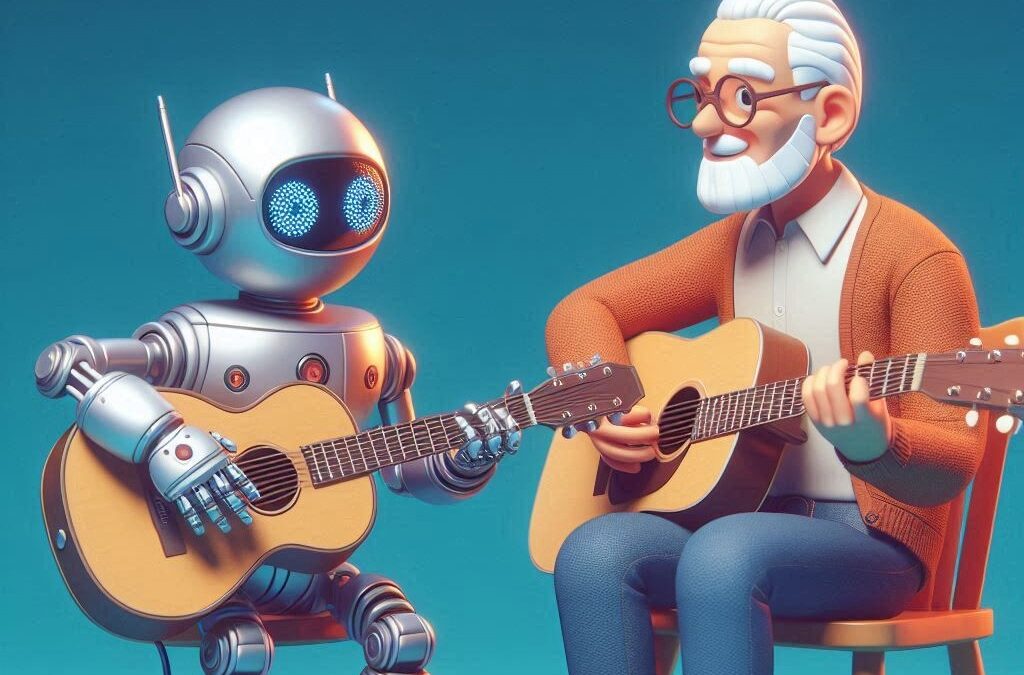
Once upon a time, learning to play a musical instrument was a great challenge for many. Thus, the journey toward musicianship often required a considerable investment of time, effort, and resources.
The digital transformation in teaching has also reached music, where intelligent applications analyze your performance to help you play an instrument with greater precision
But is AI enough to learn to play the musical instrument of your dreams? Discover how AI is revolutionizing the music learning process, allowing students to access innovative resources.
The new concept of music education with AI
As AI has become more sophisticated and accessible, it has begun to transform the way students learn to play musical instruments.
Before the advent of AI, learning a musical instrument often required in-person classes with a human instructor, which could be expensive and limiting in terms of schedules and geographic location.
However, with the emergence of AI-based tools, students now have access to a wide range of learning resources that can be tailored to their individual needs and allow them to progress at their own pace.
With AI tools, students around the world can access high-quality lessons anytime, anywhere, which is helping to level the playing field and create a global community of musicians. If you want to know more about music and artificial intelligence, check out this article.
AI tools to learn to play musical instruments
Below we highlight some of the main tools and applications available:
Yousician
This platform uses AI to offer interactive lessons on instruments such as guitar, bass, ukulele, piano, and voice. Yousician listens to the student’s performance and gives them instant feedback on accuracy and rhythm, tailoring lessons to their skill level.
###Flowkey
Specially designed for pianists of all levels, Flowkey offers interactive tutorials that allow you to learn how to play your favorite songs. The application recognizes the notes played and accompanies the student in real time, making learning easier.
Simply Piano
This app teaches piano playing from beginner to advanced levels. Use the device’s microphone to listen to the student’s performance. The app in turn provides feedback on how to improve, which makes learning more effective.
Chordana Play
Developed by Casio, Chordana Play teaches users how to play the keyboard or piano through interactive lessons. The app analyzes student performance and suggests ways to improve, as well as allowing students to practice with built-in, downloadable songs.
Skoove
This platform offers interactive piano lessons that adapt to the user’s progress and learning style. Skoove listens to the student’s performance and offers tips for improvement, covering everything from basic music theory to advanced techniques.
Fret Zealot
This guitar learning system combines an app with an LED strip that attaches to the neck of the guitar. It guides users through songs and lessons, illuminating the notes and chords that need to be played in sequence.
Melodics
Designed to improve skill on keyboards and electronic drum pads, Melodics uses artificial intelligence to personalize lessons, offering exercises based on performance and detected areas of improvement.
Benefits of learning to play musical instruments with AI
Here’s a closer look at how AI is transforming the music learning process:
- Personalization of learning: By analyzing progress in real time, AI adapts teaching material and lessons to challenge the student appropriately, promoting constant and effective progress.
- Instant feedback: With AI, students receive instant feedback on aspects such as pitch, rhythm and dynamics of their performance. This feedback helps to correct errors instantly.
- 24/7 access to virtual tutoring: AI offers students access to virtual tutoring anytime, anywhere, allowing them to practice at their own pace. This is very useful for people with busy schedules or who don’t have easy access to a human tutor.
- Music accompaniment and creation: Some apps suggest harmonies, melodies, and song structures, making the music composition process easier for beginners and experienced musicians alike.
- Practice Optimization: By identifying patterns in common errors and focusing on areas that need more attention, AI helps students make the most of their practice time and develop skills more efficiently.
How to make the most of AI to learn music?
Here are some ways to leverage AI to learn to play musical instruments:
- Research and test different platforms that use AI for music teaching, so you find the ones that best suit you.
- Take advantage of the personalization capacity of AI to adapt your learning to your individual needs, adjusting difficulty levels and musical genres.
- Pay attention to the feedback on your performance given by AI tools to identify areas for improvement.
- Set clear goals and practice regularly, using AI to monitor your progress and adjust your learning approach.
- Experiment with different instruments and musical genres to expand your musical skills and knowledge.
- Join online communities and collaborate with other musicians to share knowledge and get feedback.
Is it worth learning to play musical instruments with AI?
Artificial intelligence is a powerful tool for musical learning, favoring its democratization.
The ability to personalize, instant feedback, and access to innovative resources that AI offers is revolutionizing the way people learn to play musical instruments.
When evaluating whether AI is worth leveraging in the music learning process, the answer is a resounding yes. AI offers a more accessible, personalized and rewarding learning experience than ever before.
It allows students of all types to access high-quality lessons anytime, anywhere. Additionally, the ability to adapt lessons to individual student needs ensures constant progress in musical learning.
Do you want to know more about AI? Visit our Artificial Intelligence page and get the most out of it.
This post is also available in: