
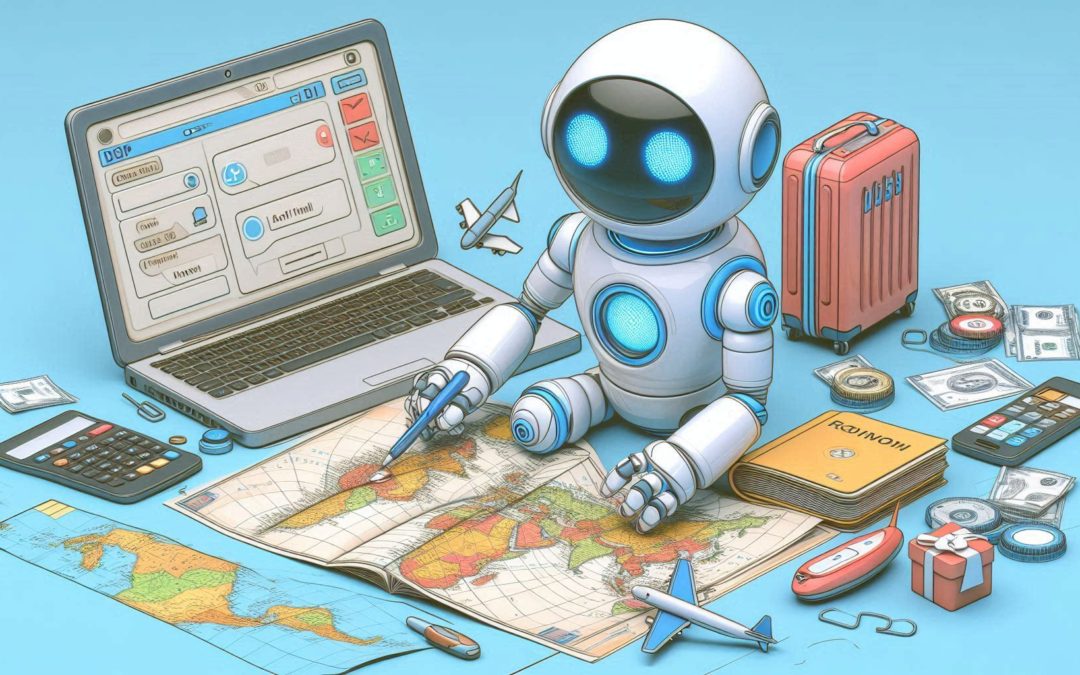
The summer season is approaching and the question is: are we taking advantage of all the technology available? artificial intelligence on Vacation has become the definitive tool for those seeking to maximize their free time and minimize logistical complications this summer.
Imagine having a personal assistant who can help you choose the perfect destination, find the best deals on flights and accommodation, organize a detailed itinerary and even remind you how to pack your suitcase.
But how exactly can you take advantage of these tools to plan your summer vacation?
Learn everything you need to know to use artificial intelligence in every phase of your vacation. From choosing a destination to planning daily activities, AI can be your perfect ally.
Choose the right AI for your vacation
There are several options on the market, such as Microsoft Copilot, Google Gemini, and ChatGPT. Microsoft Copilot and Google Gemini are good options, even in their free versions, since they stay connected to the Internet and can offer you up-to-date information.
Copilot is compatible with Microsoft 365 applications, making it easy to organize itineraries and manage documents related to your trip. In the case of Gemini, for now it does not have a flight search engine but it does give you advice on how to carry out your searches; and Google Maps, making it easy to find transportation and locations.
ChatGPT, developed by OpenAI, is also a powerful tool. Although its free version is not always connected to the Internet, its ability to generate detailed and personalized responses can be very useful.
To maximize benefits, consider using a combination of these tools. Ask them all the same questions and combine the answers to get the best information possible.
Select your favorite destinations
To start, consider the type of vacation you want. Are you attracted to mountainous and green landscapes, or do you prefer to relax on a white sand beach? The more detailed your description, the more accurate the AI’s recommendations will be.
For example, you can use a prompt like this: “I want you to recommend places to go on vacation. It should be a place with green landscapes, lots of mountains and not too expensive. A place that stands out for having beautiful views. And that it is within Europe.”
With this information, the AI can suggest destinations such as the Swiss Alps, the Black Forest in Germany, or the Pyrenees in Spain.
Reservations and transportation
Once you have selected your destination, the next step is to manage reservations and transportation. For flights, Google Gemini stands out thanks to its advice on air reservations. You can use a prompt like: “Enter a search query to find cheap flights from Malaga to Rome in August, with a maximum layover of one hour.” The AI will give you options to search on Google Flights, Skyscanner or Kayak.
Microsoft Copilot will help you organize and compare these options in a spreadsheet, making it easy to view different flights. Both tools give you information about ground transportation, such as car rental or public transportation at your destination.
When it comes to accommodation bookings, AI can also be of great help. Using prompts like: “Recommend good-value hotels in Berlin, close to the city center,” you can get a list of accommodations that fit your needs and budget through Google Gemini.
Additionally, AI can provide you with reviews and ratings from other travelers to help you make an informed decision.
For reservations, AI can help you manage confirmations and reminders. Copilot, for example, can integrate your reservations into your calendar and send you reminders so you don’t miss any important details.
Luggage preparation
Artificial intelligence can be your personal assistant, helping you organize a detailed packing list adapted to your requirements. To get started, give the AI details about your destination, trip duration, and planned activities.
For example, use the prompt: “I am going to spend 6 days in Berlin during the month of August. Help me make a packing list.” The AI will give you a complete list based on the expected weather and the activities you plan to do.
If your trip includes special activities, mention them. For example: “I’m going to climb mountains in Switzerland for a week in September. What should I bring? The AI will recommend suitable climbing clothing, swimming equipment and other essentials for these activities.
Additionally, AI can remind you of items that are often forgotten, such as chargers, plug adapters, medicines, and documents. You can ask the AI to give you a detailed checklist: “Includes essential items that I should not forget for an international trip.”
Another advantage of using AI to pack your luggage is that you can optimize the space in your suitcase. Tools like Microsoft Copilot can offer you tips on how to fold clothes efficiently and make the most of the available space.
Finally, AI can also help you foresee contingencies. For example, they may recommend packing a small first aid kit or extra items in case of unexpected changes in the weather.
Using AI while traveling
From translating phrases in the local language to finding the best restaurants, AI is at your disposal to make your vacation smoother and more enjoyable. You can ask questions about places of interest, opening hours and activity recommendations.
For example, if you are exploring Berlin and want to know the best museums, you can ask: “What are the most recommended museums in Berlin and their opening hours?”
If you need to know how to get to a specific restaurant or the best way to get around the city, simply ask: “What is the best route by public transportation from my hotel to the Pergamon Museum?”
Additionally, you can use AI to manage your time and activities. Copilot can help you organize your itinerary so you can make the most of each day. Ask something like: “Organize a full day of sightseeing in Berlin, including lunch and dinner at local restaurants.”
Remember and share the experience after the trip
When you return from your vacation, artificial intelligence can still be useful. From organizing your photos to creating content for social media, AI can make your memories last and be easily shared with friends and family.
One of the first things you can do is organize and edit your photos. Tools like Google Photos use AI to automatically classify your images, group them by places and events, and even suggest edits and enhancements.
Plus, apps like Adobe Photoshop and Lightroom, powered by AI, can help you retouch your photos professionally. You can remove unwanted objects, adjust lighting and colors, and even add effects to make your photos pop.
Sharing your memories on social networks is also made easier with AI. You can ask the AI to suggest a layout for a photo collage from your trip or help you write a powerful caption.
Artificial intelligence is undoubtedly revolutionizing the way we plan and enjoy our vacations. By integrating these tools into every phase of your trip, you will not only simplify the process, but also maximize your enjoyment and convenience.
This post is also available in: