
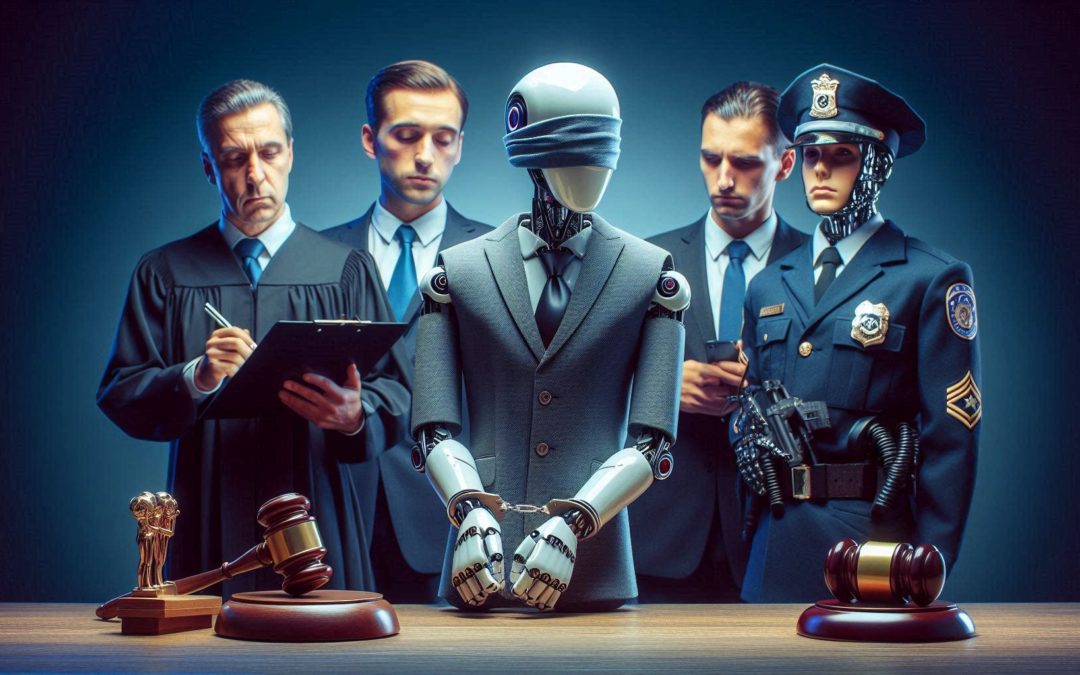
The European Union seeks to lead the global standard. However, many wonder the strict regulations that the European Union (EU) has imposed on AI will be a security model or a wall for local startups.
According to many experts and business leaders, these regulations are slowing the introduction of new technologies and leaving Europe at a disadvantage in the global race for AI supremacy.
AI regulation in the EU
The European Union (EU), known for its rigorous approach to data protection and privacy, has implemented a series of regulations to control the development and use of artificial intelligence (AI) on its territory.
The most notable of these regulations is the proposed AI Act, which seeks to establish a legal framework for the development, marketing and use of AI systems within the Union.
The AI Law classifies AI systems into different categories depending on their level of risk: unacceptable, high, limited and minimal. Those considered “high risk” will be subject to strict controls before they can be implemented.
Although this approach is praised for its intention to protect the fundamental rights of citizens, it has raised concerns in the technology community over its impact on European innovation and competitiveness.
Consequences for innovation
One of the main effects of these regulations is the slowdown in the introduction of new technologies into the European market.
Companies like Meta and Spotify have expressed frustration with European Union (EU) regulations, arguing that these laws are preventing AI models from being properly trained using public data.
This not only affects the companies themselves, but also European consumers, who could be deprived of access to the latest innovations in AI.
For example, Meta has announced that due to a lack of clarity in regulations, it has been forced to hold back the launch of its new multimodal AI model, Llama, in Europe.
This open source model, capable of understanding and processing images, represents a significant advance in AI technology, but European users may not have access to it due to regulatory restrictions.
The economic impact of AI regulation
The slowdown in AI adoption not only has technological implications, but also economic ones.
Access to advanced AI technologies is a key driver of economic growth. Companies that manage to leverage it effectively can gain a significant competitive advantage.
However, regulations in the EU are making it difficult for European companies to compete on a level playing field with their counterparts in other regions of the world, such as the United States and China.
The restrictions imposed by the EU are also affecting investment in technology. Companies may be reluctant to invest in AI research and development in Europe if they consider regulatory barriers too high.
This could lead to a brain drain, where top AI talent decides to work in other countries where regulations are more favorable to innovation.
What do industry leaders think about regulation?
Mark Zuckerberg, CEO of Meta, and Daniel Ek, CEO of Spotify, have been vocal in their criticism of European regulations.
Both leaders have highlighted that current laws are not only slowing down innovation, but are also putting Europe at a disadvantage on the global AI stage.
Zuckerberg has noted that the inability to use public data to train AI models in Europe means that AI systems developed in the region will not adequately reflect European knowledge, culture and languages.
As a result, AI products developed in other parts of the world may not be as useful or relevant to European users.
Ek, for his part, has emphasized the importance of AI in the streaming industry and how regulations could hinder the discovery of new artists and the personalization of the user experience on platforms like Spotify.
According to Ek, a simplified regulatory structure could accelerate the growth of open source AI and benefit both European developers and the broader creative ecosystem.
Europe’s difficulty in attracting talent
Another consequence of strict regulations is the difficulty in attracting and retaining talent in the field of AI in Europe.
The salaries offered by government institutions and regulatory offices of the European Union (EU) are significantly lower than those that private technology companies can offer.
This creates an imbalance where the best AI experts choose to work in the private sector, leaving regulatory agencies with limited resources to adequately oversee and understand the technology they are trying to regulate.
For example, the salary offered by the European AI Office for an AI technology specialist is considerably lower than the average salary for an AI professional at companies such as OpenAI or Anthropic.
This not only makes it difficult to hire experts, but also calls into question the ability of government agencies to effectively implement and enforce regulations in such a complex and rapidly evolving field.
The delicate balance between security and innovation
AI regulation in the EU is a complex issue that seeks to balance the protection of citizens’ rights with the need to encourage technological innovation.
However, the current approach appears to be leaning too much towards the side of caution, which could be leaving Europe behind in the global race for AI supremacy.
While it is essential that regulations are in place to ensure the ethical and safe use of AI, it is equally important that these regulations do not slow down the region’s progress and competitiveness.
To avoid being left behind, European regulators will need to find a balance that enables innovation while protecting the interests of their citizens.
In a world where AI is advancing at a dizzying pace, Europe cannot afford to be left behind.
This post is also available in: