
Has it happened to you? You enter an online store looking for a simple product (say, headphones) and you end up lost among hundreds of options, contradictory reviews and technical descriptions that seem written in another language.
In the end, you close the tab frustrated, without purchasing anything. You’re not the only one: 87% of online shoppers abandon carts due to confusing or slow experiences
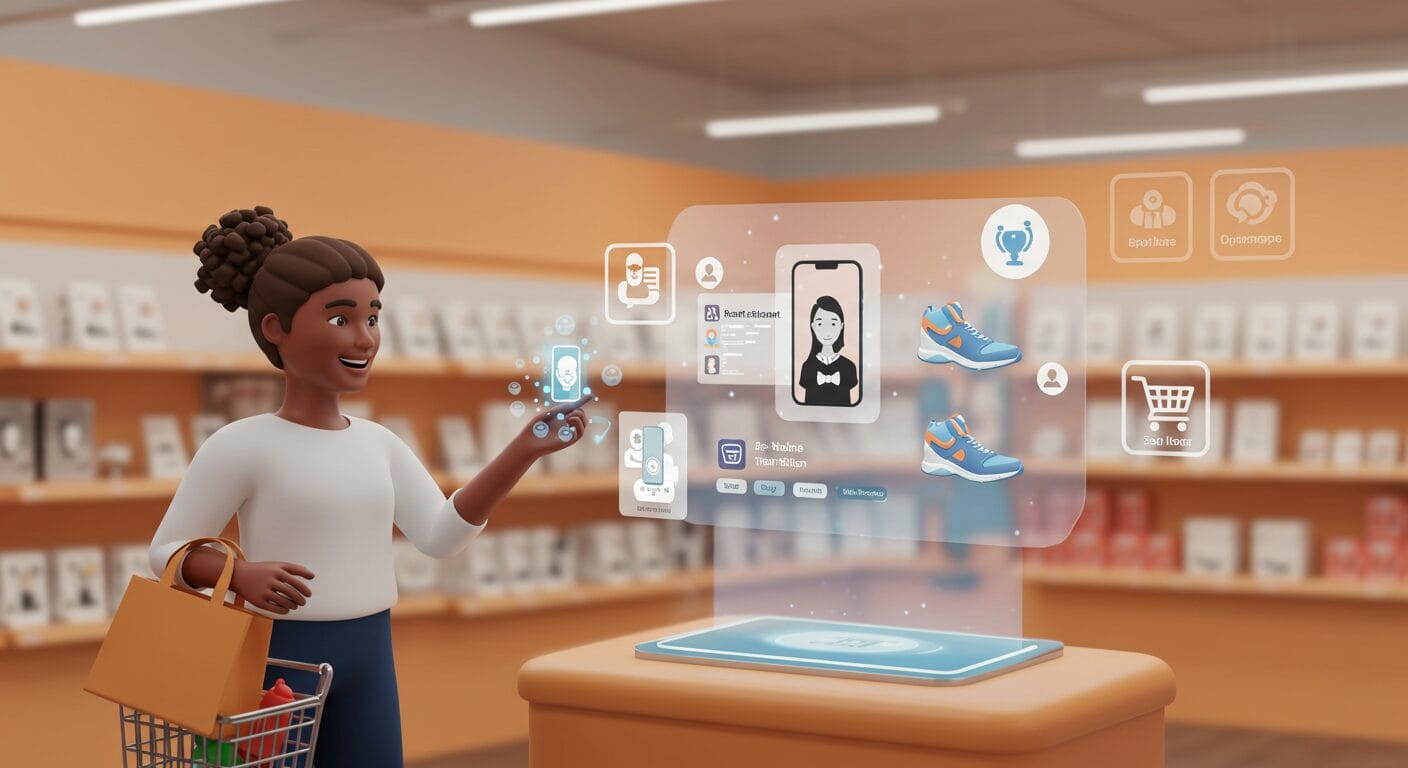
But imagine an assistant understands exactly what you need, recommends options in seconds, and answers questions like “Are these good for running?” or “Do you have free shipping?” without making you wait. That already exists, and it is called artificial intelligence.
Companies like On City, Amazon or Nike are using AI to transform e-commerce into something more personal, faster and human.
Discover how this technology solves the headaches of online shopping and why your next experience could be as seamless as talking to an expert salesperson… but without schedules or rush.
The 4 e-commerce problems that AI is solving
These are the four biggest challenges that AI is already helping to overcome:
Option Saturation
Excess products paralyze the buyer. How to choose between 500 models of sneakers or 200 coffee machines? AI analyzes your preferences and behavior to show only what is relevant.
Amazon, for example, generates 35% of its sales through personalized recommendations, preventing the user from getting lost in a sea of alternatives.
Limited support
Physical stores have salespeople, but in e-commerce, questions outside of business hours often go unanswered.
Chatbots like H&M or On City agents offer 24/7 support, resolving everything from sizes to return policies in seconds, at any time.
Slow and inefficient searches
Writing exact terms in a search engine is now a thing of the past. With AI, you can ask in natural language: “Show me student laptops under $600” and get accurate results.
Platforms like AliExpress use this technology to understand even ambiguous queries or those with typos.
Generic experiences that don’t connect
E-commerce used to treat everyone equally. Today, AI remembers your tastes, suggests products based on previous purchases and even anticipates needs. In the case of Nike, this brand allows you to customize footwear with AI, making each interaction unique.
How AI works in your shopping experience
La IA en el comercio electrónico actúa como un asistente invisible que aprende, entiende y anticipa tus necesidades. Detrás de cada recomendación hay sistemas capaces de analizar patrones de comportamiento y tomar decisiones en milisegundos.
Cuando preguntas “¿Qué smartphone tiene mejor batería por menos de $300?”, la IA no solo busca palabras clave, sino que comprende el contexto, compara especificaciones técnicas y prioriza opciones según reseñas y popularidad.
Estos sistemas mejoran con cada interacción: si ignoras productos sugeridos pero siempre clickeas en ofertas, aprenderá a mostrarte primero descuentos. Plataformas como Shopify ya integran IA que ajusta precios dinámicamente según tu ubicación o historial.
Más sorprendente aún es cómo combina datos: al comprar una cámara, podría sugerirte un trípode no por coincidencia, sino porque el 70% de compradores similares lo adquirieron después.
Lo que parece magia es matemática avanzada: algoritmos que pesan cientos de variables (desde el clima en tu ciudad hasta tendencias en redes sociales) para hacer tu experiencia más intuitiva.
Ejemplos reales donde la IA revoluciona las compras
Mientras On City lidera en Argentina, gigantes globales muestran el verdadero potencial de la IA en el comercio electrónico.
Amazon utiliza algoritmos que predicen lo que necesitarás incluso antes de que lo busques, enviando productos a centros logísticos cercanos con días de anticipación. Su sistema de recomendaciones genera el 35% de sus ventas totales.
Alibaba, con su asistente AliMe, no solo responde preguntas, sino que negocia descuentos con proveedores en tiempo real y gestiona devoluciones mediante reconocimiento de voz. Durante el Singles’ Day, su IA atendió el 95% de las consultas sin intervención humana.
En moda, H&M combina IA con realidad aumentada: su app escanea tu estilo al subir fotos y sugiere outfits completos. Mientras, Nike permite diseñar zapatillas únicas con Nike By You, donde la IA propone combinaciones basadas en tus preferencias históricas.
El lujo tampoco se queda atrás. Sephora usa reconocimiento facial para probar maquillaje virtual, sugiriendo tonos perfectos para tu piel. Y en muebles, IKEA Place proyecta productos en tu hogar con tamaño real mediante AR guiada por IA.
¿Qué ganas tú como consumidor con la IA?
La inteligencia artificial te devuelve lo más valioso: tu tiempo y tranquilidad. Imagina encontrar exactamente lo que buscas en segundos, con recomendaciones hechas a tu medida, como un vendedor experto que ya conoce tus gustos.
La IA elimina el estrés de las compras online:
- Resultados precisos sin tener que navegar por páginas interminables
- Immediate 24-hour assistance to resolve questions about sizes, compatibility or shipping
- Personalized offers that really interest you (not random spam)
- Intelligent discovery of products you didn’t know about but that fit you perfectly
In addition, you shop more safely: AI alerts you if a product has many returns or if there is a better version for a similar price. It’s not just about technology, but an experience designed to make you enjoy shopping online like never before.
Where is this technology going?
The future of AI in e-commerce points towards even more intuitive and anticipatory experiences.
We will soon see assistants who will not only answer questions, but who will be able to make autonomous purchases based on our habits and preferences, always with our consent.
The most revolutionary thing will come from the combination of generative AI and commerce: imagine describing the ideal product in words (“I need a dress for a beach wedding”) and receiving custom-created options in real time.
However, the real challenge will be to balance this hyperpersonalization with user privacy, creating transparent systems that empower the consumer without invading their privacy.
One thing is clear: AI is transforming the act of buying from a transaction to an intelligent, frictionless conversation between brands and people. Those who adopt these technologies with a human focus will lead the next era of digital retail.
This post is also available in: