
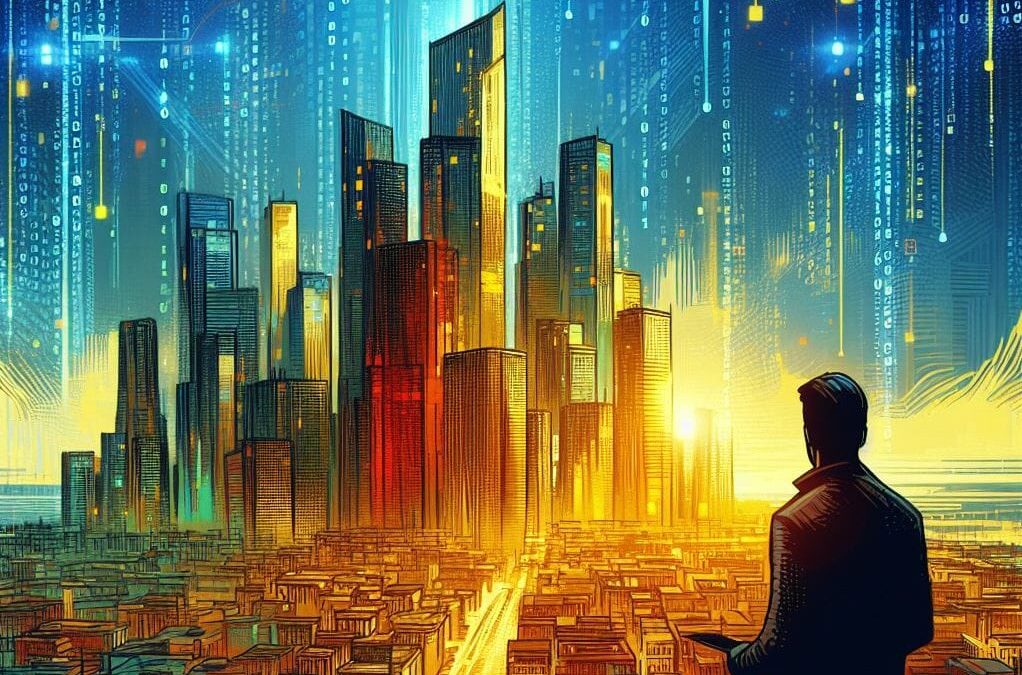
Let’s be honest… many of us have little skill or time to create incredible images. But don’t worry, because thanks to artificial intelligence you can generate images in a short time, especially if you are not an artist. It’s like Art Attack, but better.
Imagine being able to create amazing images with just a few words, without needing to be an artist or install expensive editing programs.
And more and more people are looking for tools that allow them to generate high-quality images quickly and easily.
Learn everything you need to know about generating images with artificial intelligence. Discover why this technology can benefit professionals and amateurs in their work projects and leisure activities, respectively.
How does AI work in image creation?
The process begins with data entry, usually in the form of descriptive text or example images entered by the user. AI analyzes input data with algorithms that help identify relevant patterns, characteristics, and relationships.
Based on the information processed by the AI, it begins to generate the image using techniques such as interpolation and extrapolation to fill in the details and complete the visual composition.
The AI combines elements of the example images with its own aesthetic criteria, along with composition to create a unique and original image.
After generating the initial image, AI can put it through a refinement process to improve its quality and consistency. This involves adjustments to lighting, color, composition and other visual aspects to produce a satisfactory result.
Most common AI tools to generate images
There are several artificial intelligence tools available to generate images. Here are some of the most notable ones:
- DALL-E 2: Developed by OpenAI, DALL-E 2 is an artificial intelligence tool that generates images from text descriptions. It uses an advanced language model to interpret and create images based on words provided by the user.
- Stable Diffusion: Another OpenAI tool, Stable Diffusion uses diffusion algorithms to generate high-quality images from descriptive text. It is capable of creating realistic and detailed images using a wide variety of concepts and styles.
- Deep Dream Generator: This platform uses convolutional neural network algorithms to transform images and create unique visual effects. You can upload your own images or use those provided by the platform to generate new compositions.
- Artbreeder: It is a tool that allows you to mix and combine images to create new ones. It uses machine learning techniques to generate variations of existing images, in addition to being able to adjust parameters to personalize the results.
- io: DeepArt.io uses convolutional neural networks to apply artistic styles to existing images. Users can upload their own images and choose from a variety of predefined art styles to apply to their images.
- Runway ML: It is a platform that allows users to train and run artificial intelligence models in the cloud. It offers a variety of models trained to generate images and other types of visual content.
Future impact of AI on image generation
Although the automation and efficiency promised by AI can lead to greater productivity and cost reductions in graphic design and drafting, there is also a need to consider how this could impact professionals.
The personalization capacity that AI offers to create images is another aspect to take into account, as it allows the creation of visual content highly adapted to the individual needs of users.
However, this raises questions about the originality and authenticity of machine-generated art, as well as the privacy and security of the data used to personalize these images.
While AI can be a valuable tool for stimulating creativity and exploring new ideas in the field of digital art, there is also a risk that it will lead to a homogenization of artistic style and expression.
Over-reliance on predefined algorithms and AI models could limit diversity and innovation in image production, resulting in a standardized visual landscape lacking originality.
Can AI images be created responsibly?
Image-generating artificial intelligence has helped democratize image creation, allowing people with diverse skills and experience levels to produce high-quality content quickly and easily.
Although AI tools such as DALL-E 2, Stable Diffusion and Deep Dream Generator offer a wide range of creative possibilities, their use poses challenges in terms of originality, privacy and stylistic diversity.
While AI has the potential to improve efficiency and personalization in image creation, its future impact must be evaluated to ensure a balance between technological innovation and the preservation of human creativity.
Do you want to know more about AI? Visit our Artificial Intelligence page and get the most out of it.
This post is also available in: