
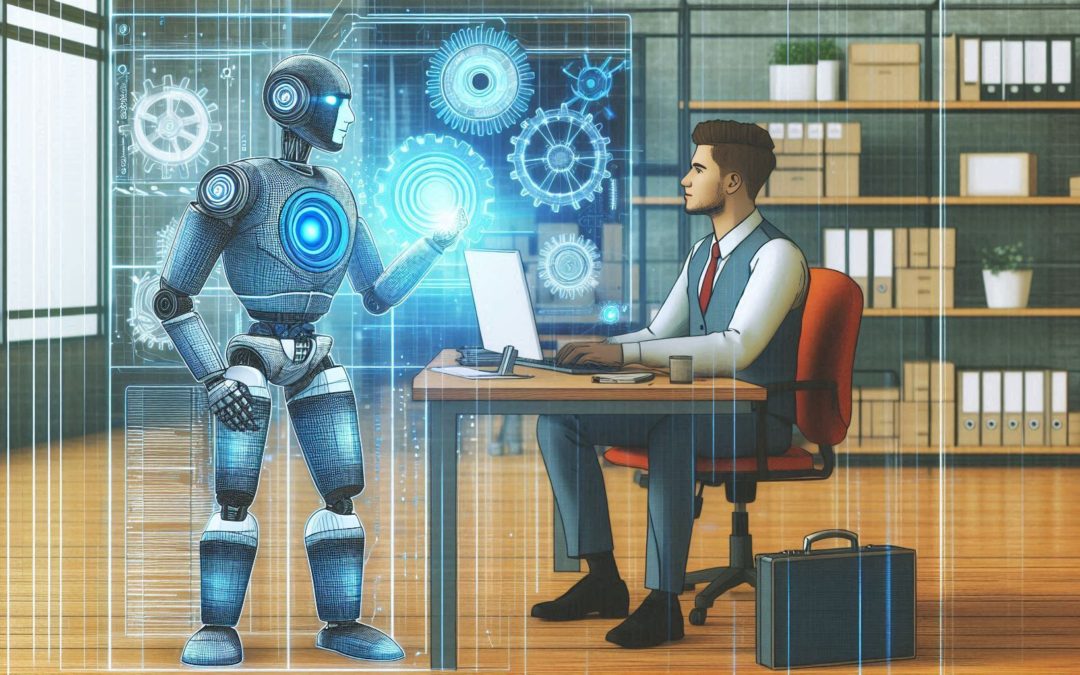
In recent years, artificial intelligence (AI) has been hailed as a revolutionary tool, which has the potential to transform the workplace.
However, this optimistic view is not reflected uniformly across all companies. While managers are hopeful and have already integrated AI tools into their business strategies, their employees are more cautious.
The reality on the ground shows a significant gap between the expectations of leaders and the everyday experience of programmers and employees.
Discover the disconnect between managers’ enthusiasm and employees’ skepticism. We’ll look at how businesses can close this gap so AI can fulfill its transformative potential.
Misperceptions about AI and productivity
In the community, artificial intelligence (AI) is presented as a solution to productivity problems. Many bosses often assume that integrating advanced technologies will bring immediate improvements in operational efficiency.
This perception is fueled by success stories and narratives that highlight impressive examples, such as companies that have achieved significant increases in production or cost reductions.
However, these perceptions often ignore the context of this success. The optimistic stories occur in large companies, with vast resources to invest in technology and specialized talent, while small and medium-sized companies face other challenges.
Furthermore, the optimistic view does not always consider the difficulties associated with the application of AI, such as integration with existing systems, the need for staff training and process adjustment.
Bosses and the Dunning-Kruger Effect
The Dunning-Kruger effect is a cognitive bias in which people with less skills or knowledge about a topic tend to overestimate their abilities and understanding.
This phenomenon is frequently observed in the business context, especially among leaders who make decisions about the adoption of technologies such as artificial intelligence (AI).
Managers who do not have a deep understanding of the technology may fall into the Dunning-Kruger effect, believing that implementing AI will solve all productivity problems without requiring additional adjustments.
This phenomenon can also result in underestimating the challenges associated with AI integration, such as the need for staff training, adaptation of existing processes, and organizational change management.
This does not mean that bosses are incapable, but rather that by lacking the specialized knowledge of employees, they form unrealistic expectations about the tasks they perform at lower levels.
Factors that limit the increase in productivity with AI
Although artificial intelligence (AI) has the potential to improve productivity, several factors may limit its expected benefits.
- Improper implementation: Technology may not integrate well with existing systems, causing disruptions rather than improvements. Lack of alignment with business objectives also diminishes positive results.
- Learning curve associated with new technologies: Employees need time to adapt to AI, which can result in a temporary decrease in productivity while they become familiar with new processes.
- Implementation and maintenance cost: Expenses associated with acquiring technology, training personnel, and upgrading infrastructure can be high and exceed the immediate benefits perceived.
- Resistance to change: AI adoption can create resistance among employees, who may feel that their jobs are in jeopardy or that the change is unnecessary, negatively affecting morale and overall productivity.
Negative effects of AI on productivity
Despite its promises, artificial intelligence (AI) can have negative effects on productivity if not handled properly. One of the main adverse effects is the demotivation of staff.
The perception that AI could replace jobs or reduce the importance of employees can affect their engagement. Employees who feel that their roles are threatened by technology may experience demotivation and, therefore, low productivity.
Likewise, over-reliance on AI can lead to a lack of employee skills. If workers rely heavily on AI to perform tasks, they may lose the ability to solve problems, affecting flexibility in various situations.
What role should employees play in these cases?
Employees must be willing to learn and adapt to the new tools and challenges that AI introduces. An open attitude toward learning and flexibility can facilitate a more efficient transition.
Additionally, companies must invest in training to ensure employees understand how to use AI effectively. Insufficient training leads to misunderstandings and inappropriate use of technology, reducing the expected benefits.
Employees should also provide regular feedback. Their experience with AI provides valuable insight into issues that arise. Listening to employees and adjusting processes based on their feedback can improve AI effectiveness
Successful integration of AI requires cooperation between employees and leaders to ensure that the technology fits the needs of the team and is used to drive productivity.
Navigate AI productivity wisely
To maximize the benefits of artificial intelligence without becoming disillusioned, companies must take a balanced approach. AI integration is not a magic bullet, but a process that requires careful planning and prudent management.
Therefore, technology must be evaluated and adapted to the specific needs of the organization, ensuring alignment with business objectives and seamless integration with existing systems.
Additionally, ongoing training and employee support are essential to mitigate resistance to change and make the most of AI capabilities.
The key is to understand that AI is a tool that can boost productivity when implemented in an informed and realistic way, and not a foolproof remedy for all organizational problems.
Prudence and preparation are essential to avoid unrealistic expectations and ensure a positive impact on productivity.
This post is also available in: