
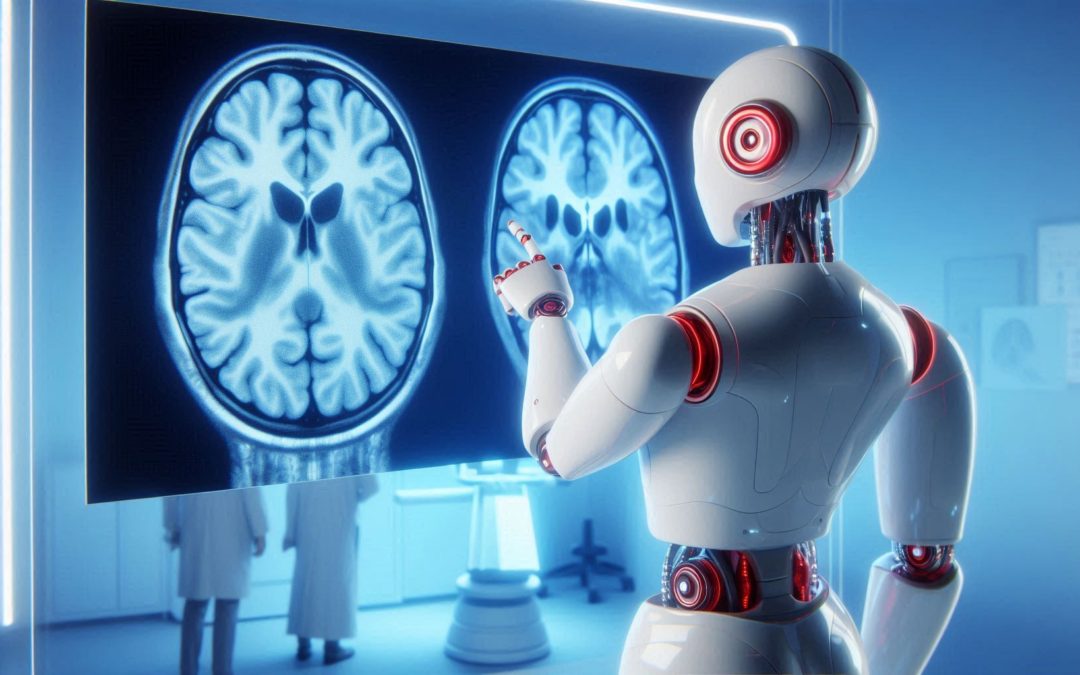
From disease prediction to medical image analysis, AI is proving to be a valuable tool for healthcare professionals.
However, although these technologies can offer fast and accurate diagnoses in many cases, there are associated risks that we should not overlook.
We have already explored how AI is transforming diagnosis through images, but it is time to address the dangers that arise from its use, such as lack of transparency, biases and possible misuse of medical data.
The role of AI in medical diagnosis
The use of AI in medicine has grown exponentially in recent years. One of its most notable applications is the analysis of medical images, such as x-rays, magnetic resonance imaging (MRI), and computed tomography (CT).
These AI models are designed to detect patterns in images that might be difficult for the human eye to identify, which can lead to faster and, in theory, more accurate diagnoses.
Companies like Elon Musk’s xAI, which has recently asked users to upload medical images to train its AI, are looking to improve the performance of their diagnostic systems.
However, these types of requests also raise important questions about the privacy and reliability of these systems.
The risks of AI in medical diagnosis
Lack of transparency and control over data
One of the biggest risks associated with the use of AI in medicine is the lack of transparency in data management. When patients upload their medical images to AI platforms they may not be fully aware of how that data will be used.
AI models need large amounts of data to train and improve, and medical images can be an important source of information.
However, this data can be used to train algorithms without patients’ explicit consent, raising serious privacy concerns.
A recent example of this concern is the case of Grok, xAI’s chatbot. In October of this year, its founder and owner, Elon Musk, asked users to upload medical images to improve the accuracy of his model.
Although Elon Musk stressed that the model would improve over time, he did not make it clear who would have access to the data uploaded by users, creating uncertainty about the security of personal information.
Bias in algorithms
Another relevant problem is the bias that AI models can present when analyzing medical images. We talked about AI biases and their dangers a few months ago.
According to a study by MIT, AI models that analyze X-rays can be very effective in predicting demographic characteristics such as gender, age, and race.
However, these same models show “equity gaps” when applied to different demographic groups. This means AI can be more accurate when analyzing images from certain groups, while underperforming with others.
AI detects hidden patterns and uses them as shortcuts
This bias is because AI algorithms can rely on demographic shortcuts, such as gender or race, to make diagnostic decisions.
This can result in incorrect diagnoses, especially for women, minorities, or those with characteristics less represented in the training data.
An example of this occurs in chest x-ray analyses, where AI models can fairly accurately predict a patient’s race based on the image, but at the cost of less accuracy in diagnosing actual medical conditions.
These biases can be dangerous, as the decisions made by AI may not be the most appropriate for certain patients, which could result in inappropriate treatments or even serious medical errors.
The dehumanization of the diagnosis
Another risk of the increasing reliance on AI in medical diagnoses is the potential dehumanization of the healthcare process.
Although AI algorithms can help doctors make more informed decisions and speed up the diagnostic process, it is essential to remember that medicine is a human discipline that must take into account patients’ individual experiences, context and concerns.
AI systems, no matter how advanced, cannot replace the empathy, clinical judgment and experience of a healthcare professional.
Overreliance on AI
In fact, many experts in radiology and medicine have noted that, although AI can be useful in initial diagnosis, it is not equipped to make critical decisions without human supervision.
Current technology, such as xAI’s Grok, has proven to beincapable of providing accurate diagnoses in all cases.
For example, when analyzing mammogram images, Grok confused a breast MRI with an image of the brain. Although this AI may improve over time, exclusive reliance on this technology could put patients’ health at risk.
Unauthorized use of medical images
One of the biggest concerns about using AI in medical image analysis is the potential unauthorized use of the images to train models.
If patients are not informed about how their data is used or do not give explicit consent, their images can be used to train algorithms without their knowledge.
This is especially concerning on platforms like Grok, where it is not clear whether users are giving explicit consent for their data to be used for AI training purposes.
These types of practices not only raise ethical questions about consent, but also about data security.
Medical images are an extremely sensitive source of personal information, and their exposure to third parties could have serious consequences for patient privacy.
Human doctors remain indispensable
Although AI can be a useful tool for doctors, we must not forget that medical diagnoses must still be made by trained professionals.
These can consider all aspects of a patient’s health, not just the patterns identified by an algorithm. Technology can improve, but it must always be supervised by the human hand.
This post is also available in: