
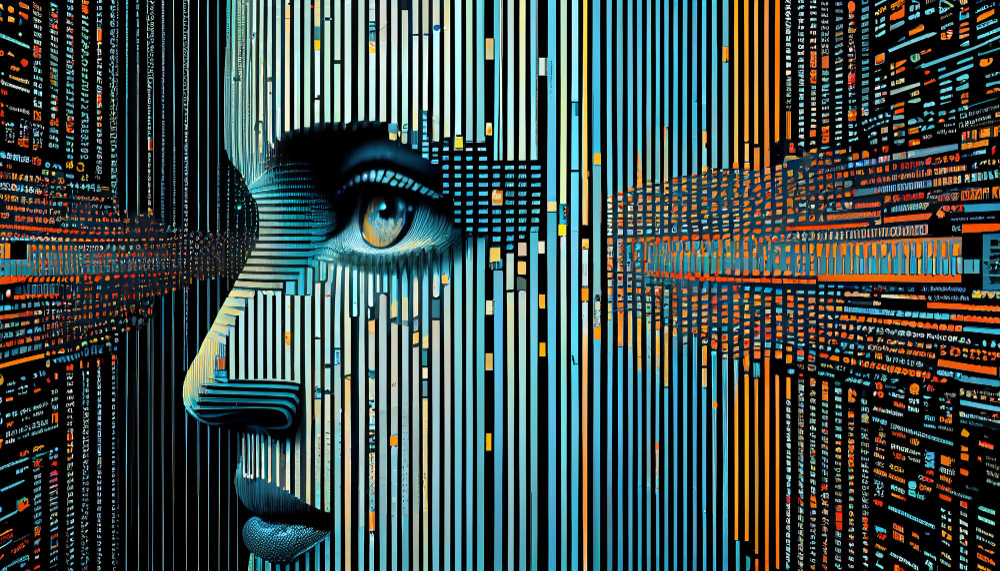
In the movie “Her”, Theodore falls in love with Samantha, who is charming, intelligent, funny and… is an artificial intelligence. In the universe of the film it is something common, but in reality this is part of science fiction.
However, there are those who ask ChatGPT for advice to solve their personal problems. And the effectiveness of this AI can make you think that it feels and empathizes with you, when there is coding and programming involved.
Therefore, can artificial intelligences feel emotions? In this article we explain the mechanisms that make an AI answer your questions convincingly, without it necessarily being able to feel.
History of emotion research in AI
During the 1950s and 1960s, while being able to create artificial intelligences was being explored, the idea of adding emotions to them was incipient. In the following decades, AI research focused on logic and reasoning, with less focus on emotions.
However, since the 1990s, interest in emotions in AI has increased, influenced by advances in cognitive psychology and neuroscience.
Computational models emerged, such as the OCC model, that attempted to represent emotions in terms of relationships between objects and events.
In the 21st century, research diversified into areas such as emotional robotics and emotional artificial intelligence. Systems were developed capable of recognizing and responding to human emotional expressions, such as facial recognition and prosody in speech.
In recent years, there has been growing interest in human-AI interaction, especially in areas such as customer care and AI-assisted therapy.
How do AIs simulate emotions?
Artificial intelligences (AI) simulate emotions using mainly data processing techniques and algorithms designed to interpret and generate responses to emotional stimuli. Learn about some of the most common approaches:
Data analysis
AIs can analyze large amounts of data, such as text, images or voice, to identify patterns associated with emotions. They can learn to recognize key words, facial expressions, or tones of voice that suggest emotions such as happiness, sadness, or anger.
Computational models
These models represent how human emotions work and can include algorithms that assign emotional values to different situations or events, allowing AI to interpret and respond to emotional stimuli more accurately.
Machine learning
AIs can be trained with machine learning algorithms to recognize and generate emotional responses.
For example, neural networks can be used to learn to associate certain stimuli with specific emotional responses, allowing AI to simulate emotional responses in a more dynamic and adaptive way.
Natural language generation
Some AI can generate emotional-sounding natural language responses by using text generation algorithms.
These algorithms can learn to produce responses that include words and phrases associated with different emotions, giving the impression that the AI is experiencing or expressing emotions.
Limitations and challenges of AIs to express emotions
Despite advances in the simulation of emotional responses in artificial intelligence (AI), there are limitations in this field. Here are some of the main ones:
- Lack of contextual understanding: AIs may have difficulty understanding the full emotional context of a situation, which can lead to inappropriate or inaccurate responses.
- Limitations in emotion detection: Emotion detection can be influenced by factors such as the quality of data input and individual differences in emotional expression.
- Lack of genuine emotional experience: This limits the ability of AIs to understand the emotional meaning of a situation. The emotional responses of AIs are the result of algorithms and programming rules, and have no real emotional basis.
- Risk of bias and stereotypes: AIs can be affected by biases and stereotypes in training data. For example, if the training data contains cultural biases, the AI could show biases in its understanding of emotions.
- Ethical and privacy challenges: For example, the use of AI to analyze and predict emotions in users could raise questions about invasion of privacy and unethical use of personal data.
- Misinterpretation of emotion: This could lead to inappropriate or insensitive responses. This may be due to a lack of context or the AI’s inability to understand the complexity of human emotions.
Future perspectives on emotions in AI
Future AIs are expected to be better able to recognize and respond to human emotions in an empathetic and sensitive way, which could improve the quality of human-AI interaction in a variety of applications, from mental health care to customer service.
Researchers are working to improve the ability of AIs to understand complex emotions, such as empathy, compassion, and humor. This would involve the development of contextually sensitive models that read the subtleties of human emotions.
In fields such as robotics and autonomous vehicles, future AIs are expected to be able to recognize and respond to human emotions effectively to improve interaction and safety.
For example, autonomous vehicles could adapt their behavior based on emotional cues from pedestrians and other drivers.
Emotions in AI: something feasible in the future
Advances in integrating emotions into artificial intelligence promise to transform the way we interact with machines and autonomous systems in the near future.
As AIs become more capable of recognizing and responding to our emotions, new possibilities open up to improve the user experience and offer more personalized solutions.
By continuing to research and collaborate in this context, we can ensure that AIs with emotional capabilities are developed and used in ways that benefit society as a whole.
Do you want to know more about AI? Visit our Artificial Intelligence page and get the most out of it.
This post is also available in: