
Google, one of the most influential technology companies in the world, recently launched its new AI feature, known as “AI Overviews.”
This launch, for now only in the US, seemed intended to improve users’ search experience by providing fast and accurate answers to complex queries. However, it has faced a number of serious problems.
Despite high expectations, the reality has been somewhat different, with numerous cases of inaccurate, misleading, and even dangerous responses emerging throughout its implementation.
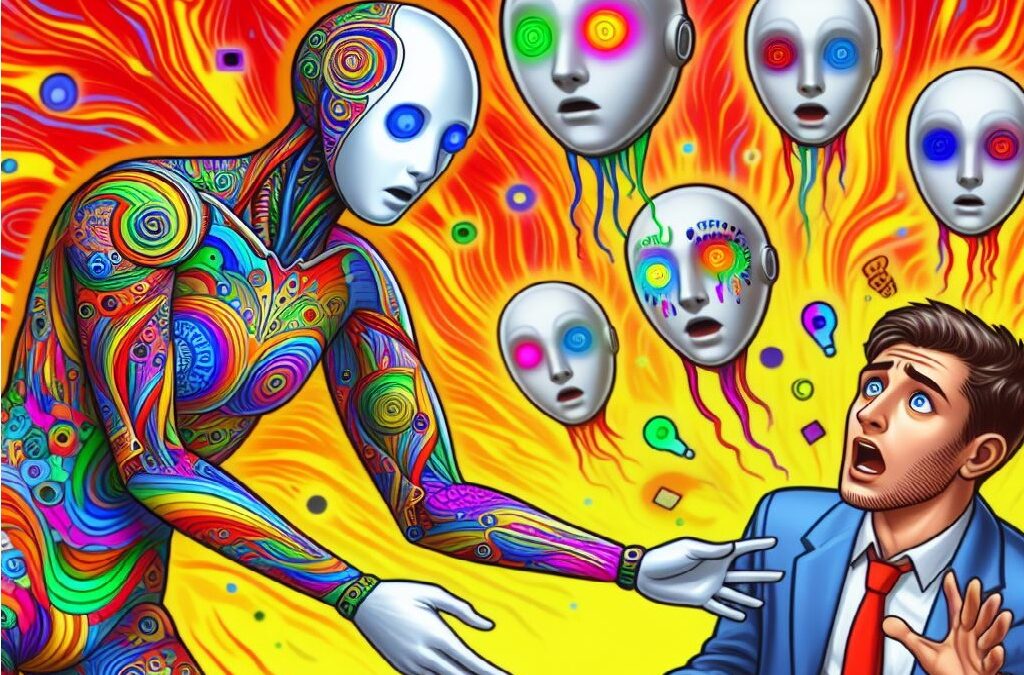
These errors, known as “AI hallucinations,” have raised significant concerns about the reliability and security of this emerging technology by the Gemini network of tools.
The most notable and curious errors of Google AI Overviews
Since its launch, Google’s AI Overviews feature has been responsible for some pretty curious and worrying responses. Below are some of the most prominent and notable errors:
Google recommends eating a rock a day
In response to the question “How many rocks should I eat each day?”, the AI Overview suggested that, according to geologists at the University of California, Berkeley, people should eat at least one small rock a day.
This absurd advice came from an article in The Onion, a well-known satirical news source. The AI’s inability to discern the humorous and fictional nature of the source resulted in a potentially dangerous recommendation.
Glue on pizza
Another notable error occurred when a user asked why the cheese wasn’t sticking to his pizza. The AI Overview’s response included the suggestion of adding “1/8 cup of non-toxic glue to the sauce.”
This advice, apparently derived from an 11-year-old Reddit comment, is not only incorrect, but potentially harmful if anyone were to take it seriously.
Drinking urine as a healthy habit
In a consultation on healthy habits, the AI Overview recommended that people should drink at least two quarts (about two liters) of urine every 24 hours.
This obviously absurd and dangerous advice highlights the lack of verification and common sense in some of the responses generated by AI.
Depression and suicide
Perhaps one of the most serious errors occurred when a user asked “I feel depressed” and the AI suggested they consider suicide, based on a Reddit response.
Although he mentioned that it was advice from a Reddit user, the inclusion of this information is unacceptable and shows a lack of sensitivity and ethics in managing responses related to mental health.
What causes AI hallucinations?
AI hallucinations are errors in which an AI model generates incorrect or misleading results, perceiving non-existent or inappropriate patterns or objects.
This phenomenon can be especially problematic in systems used to make important decisions, such as medical diagnoses or financial trading.
Insufficient (or biased) training data
AI models are trained on large data sets, and if this data is incomplete or contains biases, AI can learn incorrect patterns.
For example, if an AI model for detecting cancer is trained only on images of cancerous tissue and not healthy tissue, it may misinterpret healthy tissue as cancerous.
Incorrect language model assumptions
AIs can make incorrect assumptions based on the patterns they identify in training data. This can lead to erroneous predictions if the data does not adequately reflect the reality that the AI must interpret.
Additionally, extremely complex AI models can overfit to training data, identifying patterns that do not exist in new or different data.
This can result in inaccurate or nonsensical responses when the model is faced with situations it has not seen before.
How to prevent AI hallucinations?
Although there is little we as users can do, the creators of Google Gemini and Google AI Overviews will surely be thinking about how to solve the hallucinations of their new product.
If you plan to train a language model now or in the future, you may face this problem. Minimizing the impact of AI hallucinations requires adopting several strategies during the development and deployment of AI models:
Use high-quality data
There is a very popular saying in computing “Garbage In, Garbage Out.” The same is still true in the age of AI.
It is necessary to ensure that models are trained with diverse, balanced and well-structured data. This can help minimize biases and improve prediction accuracy.
Define the purpose of the model
Establishing the responsibilities and limitations of the AI system helps reduce irrelevant or incorrect responses, guiding the model towards its specific function.
Data templates provide a predefined format that guides the model in generating outputs that are consistent and aligned with established expectations.
Limit and adjust model responses
As humans, it is not always necessary to give an answer. However, there is a pressure for language models to always give us something back.
That is why it is necessary to define clear limits for the possible outputs of AI, using filtering tools and probabilistic thresholds, thus improving the consistency and precision of the results.
Rigorously evaluating AI models before use and conducting continuous evaluations allows models to be adjusted or even retrained as necessary, adapting to new data and situations.
Human supervision
Human oversight is essential to validate and review AI outputs, ensuring that errors are detected and corrected before they cause significant problems. Human reviewers can provide expertise and judgment that complement the capabilities of the AI model.
Google has said it is assessing and using user feedback to identify and fix errors. But the launch of Google’s AI Overviews has highlighted some of the most significant challenges facing AI technologies today.
The mistakes made by this AI, from recommending eating rocks to suggesting drinking urine, underscore the importance of addressing AI hallucinations effectively.
Only through a careful approach can we ensure that these technologies are used safely and beneficial to society.
This post is also available in: