
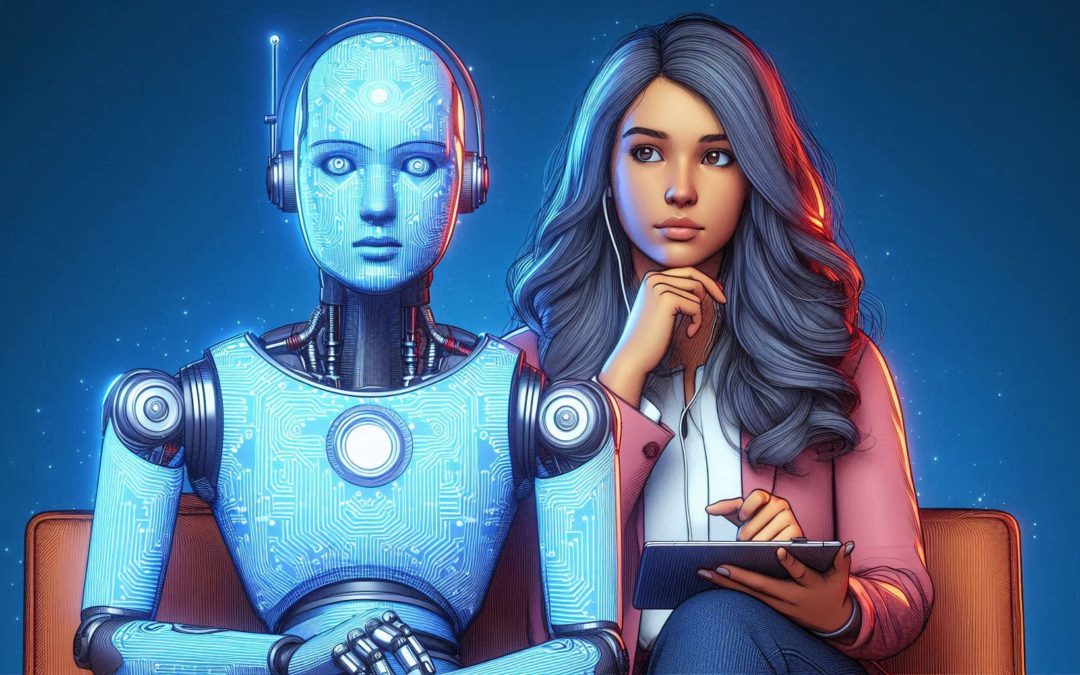
In recent years, the impact of artificial intelligence (AI) in the field of mental health has sparked great interest. The possibility of algorithms offering emotional and therapeutic support has generated both enthusiasm and skepticism.
Could an AI program replace the human connection and empathy of a therapist? The use of AI in psychology is not a new concept.
Today, platforms like ChatGPT and Character AI allow millions of people to interact with bots that present themselves as therapists. However, the question of whether AI truly replaces traditional psychological therapy still remains.
Learn about the benefits, limitations and future prospects of AI in psychological therapy, and we will evaluate whether these technological tools can be a substitute for psychologists and psychiatrists in mental health care.
Evolution of AI in Psychology
The first milestone of AI in psychology was the creation of Eliza in 1966, a program developed by Joseph Weizenbaum at the Massachusetts Institute of Technology (MIT). Eliza simulated a conversation with a therapist following Carl Rogers’ humanistic approach.
Over time, the development of AI in psychology has advanced with the incorporation of more sophisticated algorithms and machine learning.
Chatbots have evolved from simple conversation simulators to complex tools capable of analyzing and responding to human emotions with greater precision. Applications like ChatGPT and Character AI use language models to provide psychological support.
Additionally, startups like Thera4All have developed AI-based psychological self-assessment solutions, such as ‘Brain’, which allows users to perform an initial self-assessment and receive recommendations on the need to consult a professional.
Applications of Artificial Intelligence in Psychology
One of the main applications is the creation of chatbots and virtual therapists, such as the ‘Brain’ chatbot developed by the Spanish startup Thera4All.
These tools allow users to perform psychological self-assessments and receive recommendations about the need to consult a professional, all through natural conversational interactions.
AI is also used for daily support in processes that are aggravated by loneliness, such as grief, trauma and other emotional problems. For example, virtual therapists offer a safe space for people to express their emotions.
Another significant application is the ability of AI to perform initial diagnostic screening and assess the urgency and severity of cases.
Controversies of using AI as a substitute for therapy
One of the main controversies is the limited ability of AI to establish deep emotional connections with patients. Empathy, intuition, and the ability to read between the lines are human skills that machines have not yet accurately replicated.
Furthermore, over-reliance on AI would lead to the dehumanization of therapy, where patients are treated by algorithms rather than compassionate human beings.
And AI has not yet reached a level of total autonomy, since algorithms require continuous supervision and training by humans.
There is also the ethical question of replacing human therapists with machines. AI can be a valuable complementary tool, but many experts agree that it should not completely replace human interaction in psychological therapy.
The therapeutic relationship, built on trust and empathy, remains fundamental to the success of psychological treatment.
Using AI responsibly
Despite significant advances in artificial intelligence (AI) in the field of psychology, it is crucial to recognize that reliable and effective help is still provided by specialized therapists.
AI applications such as chatbots and virtual therapists can offer support and perform initial assessments, but they cannot replace the depth and nuance of human interaction in therapy.
Likewise, AI tools, such as ChatGPT, are designed with safeguards to handle sensitive psychological topics. These AIs identify when users are addressing serious problems and, instead of offering answers, encourage users to seek professional help.
The goal of AI in psychology should be to complement, not replace, the work of therapists. While technology can offer valuable support and accessibility, the clinical expertise and human connection of therapists remains irreplaceable.
AI in the future as the axis of psychological therapy
As artificial intelligence advances, its role in psychological therapy could become increasingly relevant. However, there is still a long way to go before AI can play a central role in mental health care.
Advances needed to achieve this goal include improving AI’s ability to understand and replicate human empathy and ensuring rigorous oversight to avoid misunderstandings or inappropriate responses.
In the meantime, it is crucial that the information provided by AIs is handled responsibly and cautiously. Mental health is not a field that should be taken lightly; Human interaction remains irreplaceable for effective and safe treatment.
AI can offer valuable support, but should not replace the expertise and empathy of psychology professionals.
This post is also available in: