
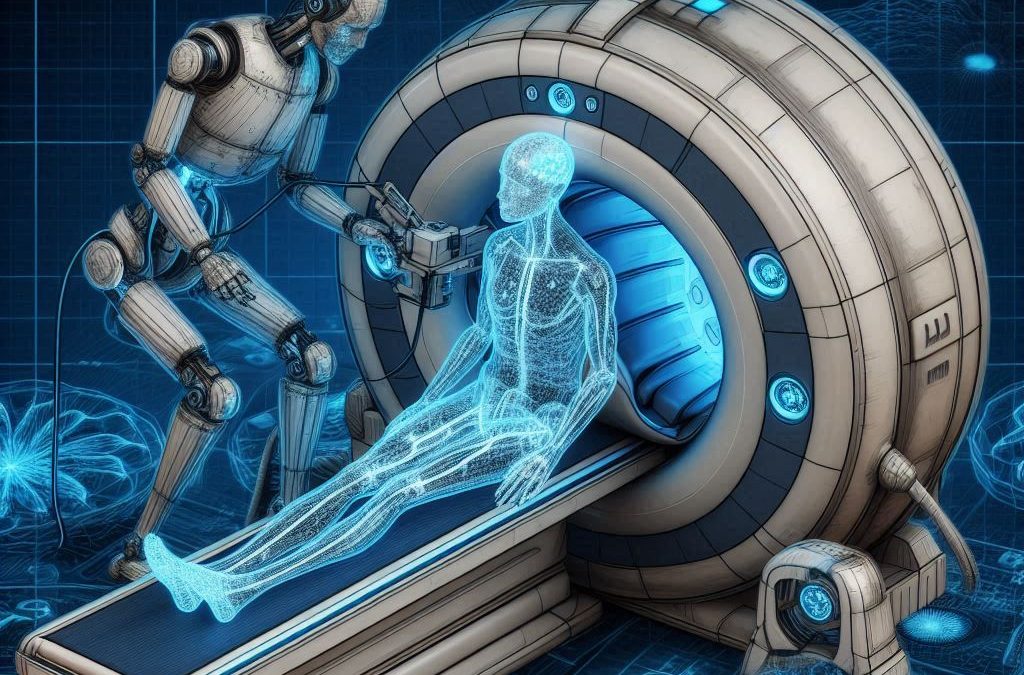
Artificial Intelligence (AI) redefines the landscape of modern medicine, especially in the field of diagnostic imaging. What once seemed like fiction is now a reality that helps improve the accuracy and speed of medical diagnoses.
Pioneering companies like Incepto and Raindance are at the forefront of this transformation, developing technologies that increase the efficiency of healthcare professionals and improve the patient experience.
Discover how the collaboration between Incepto and Raindance is revolutionizing the use of AI in diagnostic imaging, detailing its applications, benefits and the impact it has on the healthcare system.
AI and diagnostic imaging
By applying algorithms on MRIs or X-rays, AI gives radiologists powerful tools to improve the accuracy and speed of diagnoses.
According to Alfonso Martínez, general director of Incepto in Spain, “AI helps the radiologist to make a better diagnosis of patients in a much more agile way, reducing the burden of automated tasks that take a long time.”
Additionally, Gorka Gallardo, CEO of Raindance, compares AI to a “driving assistant” that makes the doctor more efficient and reduces the possibility of human error in automated processes.
AI-based solutions allow radiologists to focus on complex cases that require their expertise and clinical judgment, thereby improving the quality of patient care.
Additionally, AI’s ability to process and analyze large volumes of clinical data in real time offers more accurate and faster diagnoses, which is crucial for conditions such as cancer and cardiovascular diseases.
Incepto and Raindance Technology
The collaboration between Incepto Medical and Raindance has resulted in an innovative platform that integrates up to 25 algorithms designed to improve accuracy in the diagnosis of various medical conditions.
These algorithms cover a wide range of pathologies, including stroke, pulmonary embolism, breast and prostate cancer, as well as cardiac ultrasounds and aortic aneurysms.
Gorka Gallardo, CEO of Raindance, emphasizes that “the algorithms related to cancer and cardiovascular diseases are the most impactful, since they allow safer and earlier diagnoses of serious pathologies.”
Alfonso Martínez, general director of Incepto in Spain, explains that “with simple training for professionals and without the need for a large financial investment, any hospital or health center can start using this new technology in a matter of weeks.”
The pay-as-you-go model and cloud storage eliminate the need for expensive specialized equipment, making it easier to adopt by institutions of all sizes.
Benefits for professionals and patients
The integration of artificial intelligence (AI) in diagnostic imaging provides numerous benefits for both health professionals and patients.
Benefits for Health Professionals
- Reduction of repetitive tasks: AI relieves the burden of repetitive tasks, allowing radiologists to focus on more complex analyses.
- Improved productivity: AI helps the radiologist make a better diagnosis of patients in a much more agile way, reducing the burden of time-consuming tasks.
- Error reduction: AI minimizes errors in routine tasks, improving the accuracy of diagnoses.
Benefits for Patients
- Faster diagnoses: The implementation of AI accelerates the diagnostic process, considerably reducing waiting times.
- Increased accuracy in diagnoses: AI improves the accuracy of diagnoses, increasing the chances of detecting diseases in early stages.
- Improved patient care: Greater precision and speed in diagnoses translates into more effective, patient-centered medical care.
Benefits for the Health System
- Resource optimization: The integration of AI allows better management and organization of resources in the health system. Organizations can provide more efficient, high-quality care to patients.
- Accessibility and affordability: Incepto’s technology is accessible and affordable, eliminating the need for expensive and specialized equipment.
Future of medical diagnosis with AI
The future of medical diagnosis with artificial intelligence (AI) promises significant transformations that will continue to improve the accuracy, efficiency and accessibility of healthcare:
Technological advances
The continued development of more sophisticated algorithms and the ability of AI to learn and adapt to new clinical data means that diagnoses will become increasingly precise and personalized.
The integration of AI technologies with big data and machine learning will allow health systems to handle massive amounts of data efficiently, offering faster and more detailed diagnoses.
Personalization of treatment
AI will not only improve diagnoses but also enable personalization of treatment.
By analyzing each patient’s specific data, AI will be able to recommend treatments tailored to individual needs, improving clinical outcomes and reducing side effects.
Global accessibility
The use of AI in medical diagnosis has the potential to democratize access to quality healthcare.
In regions with a shortage of medical specialists, AI algorithms offer accurate diagnoses, allowing healthcare professionals to provide better care and reduce disparities in global healthcare.
Human-AI Collaboration
Although AI will become an essential tool, healthcare professionals will remain indispensable.
Collaboration between humans and machines will allow doctors to focus on critical aspects of patient care, while AI will take care of repetitive tasks and complex analyses.
A promising future for medicine
Innovations developed by companies such as Incepto and Raindance are transforming the medical field, offering tools that improve the accuracy, speed and accessibility of diagnosis.
These technologies not only optimize the work of healthcare professionals by reducing the burden of repetitive tasks and minimizing errors, but also raise the quality of patient care through faster and more accurate diagnoses.
As AI continues to evolve, its integration into medicine is expected to enable even greater personalization of treatments and democratize access to quality care globally.
The future of medical diagnosis with AI is promising, offering a horizon full of possibilities to improve clinical results, making collaboration between humans and machines essential towards more efficient and effective medical care.
This post is also available in: