
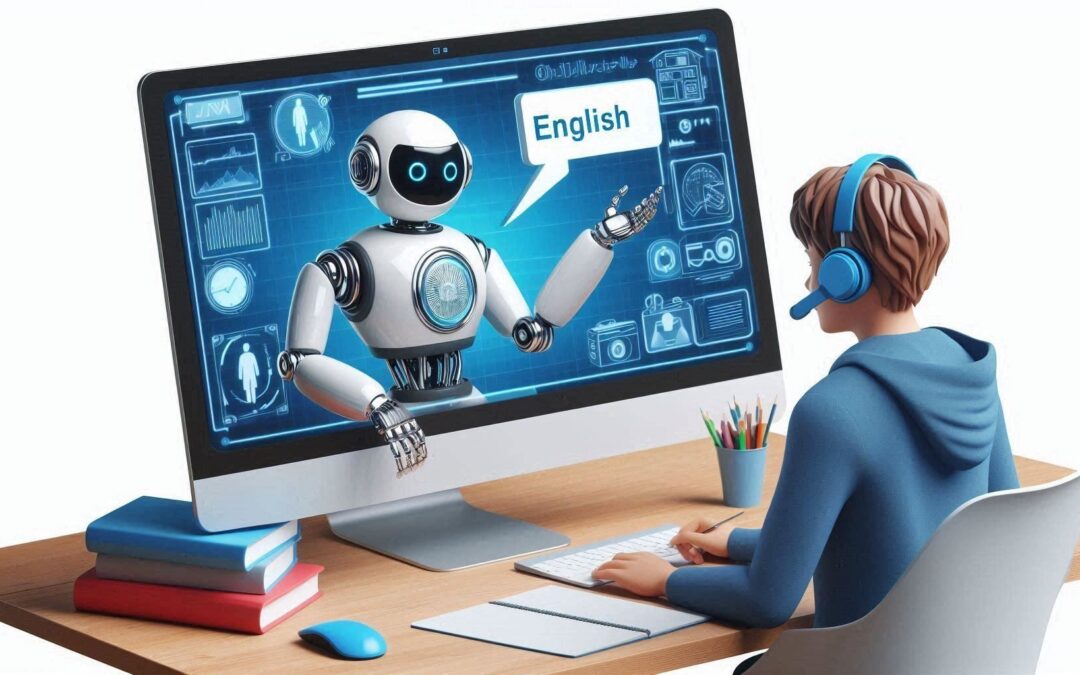
Currently, learning English has become a skill that facilitates international communication, access to job opportunities and cultural exchange. Interest in this language continues to grow, and with it the methodologies to facilitate its learning.
Instant conversational practice is a key piece in the future of AI education, allowing anyone to speak English without fear of making mistakes.
From mobile apps to interactive chatbots, AI offers innovative and personalized solutions for students of all levels. But is artificial intelligence the option you need to learn English or other languages?
Discover how AI can help you learn and perfect your English effectively, through the best tools that exist today.
Why should you learn English with artificial intelligence?
One of the main advantages of using AI is personalization of learning. Smart algorithms can analyze your progress and adapt lessons to your level and pace, ensuring you’re always challenged, but not overwhelmed.
Additionally, AI-based learning platforms incorporate games, challenges and rewards, increasing student motivation and engagement. This interactive approach makes learning more fun and effective.
Likewise, you can learn English from anywhere and at any time, with mobile applications and other digital tools. This is especially useful for those who have endless schedules or live in areas where in-person classes are not an option.
Another key benefit is instant evaluation and feedback. AI-based tools can offer immediate corrections and personalized suggestions, allowing you to fix errors on the fly and continually improve your language teaching.
Ways to learn English with AI
Artificial intelligence (AI) has revolutionized the way we can learn English, offering various tools and platforms that facilitate the educational process of teaching English in a personalized and accessible way:
E-learning platforms
There are numerous platforms such as Duolingo, Babbel and Open English that use AI to adapt courses according to the level and individual needs of the student. These offer structured lessons, vocabulary practice, simulated conversations and interactive exercises that improve oral and written comprehension in English courses.
Chatbots and virtual assistants
ChatGPT and other chatbots act as virtual tutors that allow for real-time conversation practice. These systems use natural language processing (NLP) to answer questions, correct grammatical errors, and improve user fluency by increasing your learning rate.
Voice recognition
Applications such as Rosetta Stone and Google Speech Recognition use AI to evaluate the accuracy of the user’s pronunciation and listening comprehension so they can practice and learn.
These are learning applications that offer instant and detailed feedback, allowing continuous adjustments to perfect linguistic skills such as pronunciation and grammar.
Translators with educational functions
Google Translate not only makes it easy to translate words and phrases, but also includes conversation practice options to master English.
This feature helps users learn new vocabulary and understand grammatical structures in real contexts, essential for any English learner.
Mobile apps and interactive games
English learning apps like Memrise use AI to create gamified learning experiences that keep users motivated and engaged.
These platforms offer challenges, rewards and progress tracking to improve English learning in a fun and effective way. Language learning apps are widely used with mobile phones, allowing you to speak English anywhere.
AI options with which you can learn English
In today’s market, there are various artificial intelligence (AI) options designed to make learning English easier and more accessible. These are the best apps to learn English:
- Duolingo: Uses AI to personalize learning by adapting lessons based on the user’s progress. It offers interactive exercises, vocabulary practices and automatic corrections to improve language skills to learn English with artificial intelligence.
- Babbel: This platform offers personalized courses based on the student’s interests and skill level through the use of AI. It features lessons focused on real-life situations and instant feedback to improve pronunciation and grammar through the use of artificial intelligence in different languages.
- ChatGPT: Acts as a virtual assistant with which you can practice conversations in English thanks to its AI technology. It uses natural language processing (NLP) to correct grammatical errors and provide contextualized responses, thereby improving fluency and listening comprehension to learn a new language.
- Rosetta Stone: Known for its immersion method, through the use of AI it allows users to evaluate and improve their pronunciation. It offers you interactive pronunciation exercises that help you perfect accent and intonation, making language learning easier.
- Google Speech Recognition: Used in educational applications to practice listening and speaking skills, this speech recognition technology transcribes and evaluates the accuracy of the user’s pronunciation in real time.
How to take advantage of these tools to successfully learn English?
To make the most of these AI tools for learning English, follow these tips:
- Define specific learning objectives, such as improving pronunciation, increasing vocabulary, or reaching a certain level of fluency by leveraging AI algorithms. This will help you focus your efforts and measure your progress while maintaining fluent conversations in English.
- Spend time regularly studying. Constantly practicing English is key to improving your language skills during the learning process. Schedule daily or weekly sessions and maintain a learning routine. Don’t forget to improve your English pronunciation.
- Familiarize yourself with all the tools available on the platform you use to discover how to learn English. Take advantage of interactive lessons, guided pronunciation exercises, and chatbot conversation features to practice communication skills and improve your conversational English.
- Take advantage of automatic corrections and feedback provided by AI. Use this feedback to identify areas for improvement and adjust your study approach by increasing your English skills.
- Experiment with different applications and platforms that use AI algorithms. Combining several tools can offer you a more complete and diversified learning experience while learning vocabulary.
- Apply what you learn in real situations with an English teacher or other language students. Practicing pronunciation in English conversations with friends or participating in online study groups will improve your fluency and confidence.
Take interest and learn English with AI
Without a doubt, artificial intelligence has democratized the learning of English, making this crucial skill accessible through interactive and personalized tools, becoming the future of language learning.
From platforms like Duolingo and Babbel that adapt content based on your progress, to chatbots like ChatGPT that offer realistic conversational practices, AI is transforming how we educate ourselves linguistically.
To get the most out of these technologies, it is vital that you set clear goals and take advantage of the options available for learning a language. Experimenting with different platforms enriches your learning, offering you a path to fluency when using English in real situations.
In the end, success lies in your commitment and enthusiasm for learning. With AI as your ally, you have the power to master a language that opens doors in the modern world. Maybe you won’t be able to speak like a native, but increasing your level of English will stop being your pending subject. Don’t you think it’s time?
This post is also available in: