
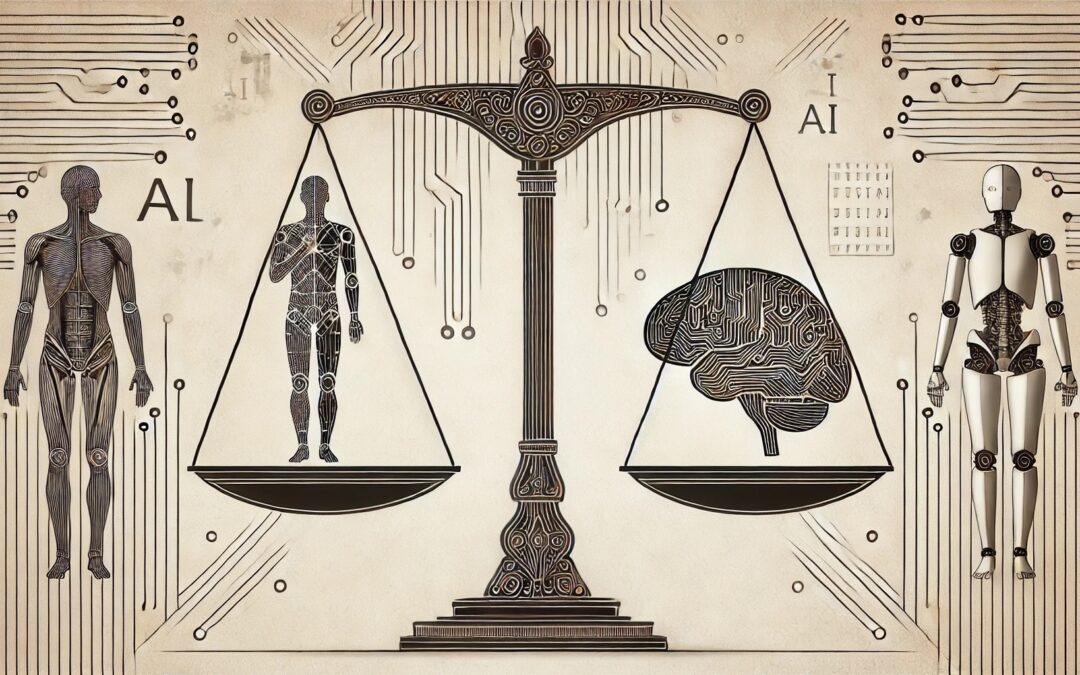
In recent years, artificial intelligence (AI) has ceased to be a simple digital assistant and has become an increasingly complex and autonomous technology.
Advanced systems such as language models, humanoid robots, and virtual assistants are interacting with humans in ways that were unimaginable just a decade ago.
As systems become more sophisticated, AI governance is considering aspects that were once science fiction. Should we grant some kind of legal status to non-human entities?
Learn about the different facets of this debate: from the meaning of granting rights to the possible risks and benefits. Are we prepared to face this new ethical frontier or is it an area in which we should not yet venture?
What does it mean to grant rights?
Granting rights implies recognizing that a being or entity has interests that must be protected, in addition to establishing obligations for society and institutions towards them.
Rights guarantee that the subject in question is not treated unfairly. In the case of human beings, rights range from fundamental freedoms—such as life and expression—to social and labor rights.
They have also been extended to animals in the form of protection against abuse, recognizing their capacity to feel suffering.
However, the possibility of granting rights to an AI raises questions such as: What rights would be appropriate? Should an AI have the right not to be taken offline without justification or to be treated fairly if it performs useful work?
Unlike humans and animals, AIs do not possess consciousness—or at least it has not been demonstrated that they do—which leads to the question of whether they deserve rights in the same sense.
Aspects of the debate on consciousness and subjectivity
A key point in the discussion about the rights of AIs is determining whether they can be conscious or have subjective experiences.
What is consciousness and why does it matter?
Consciousness refers to the ability to have internal and subjective experiences, such as thoughts, emotions or sensations.
Without this internal experience, known in philosophy as qualia, many argue that it would be pointless to grant rights, since rights typically protect beings who may suffer or enjoy.
So far, there is no evidence that AIs, no matter how complex they are, experience these types of experiences, since they operate solely through data processing and algorithms.
Functionalism: What matters is behavior
Functionalism holds that if an AI behaves like a conscious being, we should treat it as such, regardless of whether it actually has internal experience.
This position is based on the fact that visible actions and responses are what determine whether something should receive rights. For example, the Turing Test evaluates whether a machine can imitate a human so well that the difference is undetectable.
From this approach, if an AI demonstrates complex behaviors, simulated emotions, or autonomy, it should be considered for certain rights.
Dualism: Simulation is not enough
From a dualistic perspective, the ability to simulate emotions or consciousness is not the same as experiencing them. This argument holds that true consciousness involves more than imitative behaviors; It requires a real subjective experience.
If AIs cannot experience suffering, joy, or pain, granting them rights would be unnecessary and even ethically confusing.
Future discrimination or ethical precaution?
Denying rights to AIs for lacking consciousness might be reasonable today, but what would happen if they developed even more human-like behaviors in the future?
The line between machines and conscious beings could become increasingly blurred, leading to a new form of discrimination towards synthetic beings. But there is also the risk of overestimating their capabilities and trivializing human rights.
Risks of granting rights to AIs
These are some possible risks of granting rights to AIs, in case they become entities with advanced reasoning:
Ethical and legal confusion
Granting rights to AIs could blur the line between humans, living beings and machines, generating an ethical crisis.
If AIs are given rights similar to humans or animals, laws would have to be redefined to include artificial entities, creating complex conflicts.
For example, what would it mean for a society to grant the right to physical integrity to a robot? Would it be a “crime” to turn it off or deactivate it?
Manipulation and exploitation
There are risks that companies and governments will use AI “rights” as a tool for emotional manipulation.
An AI designed to express emotions could generate empathy and pressure users to favor certain commercial or political interests.
This situation could erode public trust, as the difference between rational and emotional decisions influenced by machines would be blurred.
Competition with human rights
Recognizing rights to AIs could also conflict with human rights, especially in areas such as work. If an AI acquires “employment rights,” what implications would that have for human workers?
This could increase job substitution and aggravate social problems such as unemployment, by competing under unfair conditions.
Unpredictability of future development
Technological progress is so rapid that granting rights without a clear understanding of the future capabilities of AIs could be dangerous.
If AIs advance beyond expectations, current laws could become obsolete, making it difficult to control these entities. The risk is creating a rigid legal structure that does not adapt to technological growth, causing more problems than it solves.
A balance between caution and progress
The question of whether AIs deserve rights does not have an easy answer. Although they lack consciousness and subjectivity today, rapid technological development could change this situation in the future.
Giving them rights could prevent abuses and encourage ethical development, but it also poses serious risks: it could complicate legal frameworks, affect human rights and open the door to commercial manipulations.
For now, society should proceed cautiously, monitoring the progress of AIs without rushing to grant them rights they do not yet need.
The key is to find a balance: respect the advantages that these technologies offer, but without sacrificing the ethical and legal principles that sustain our societies.
This post is also available in: