
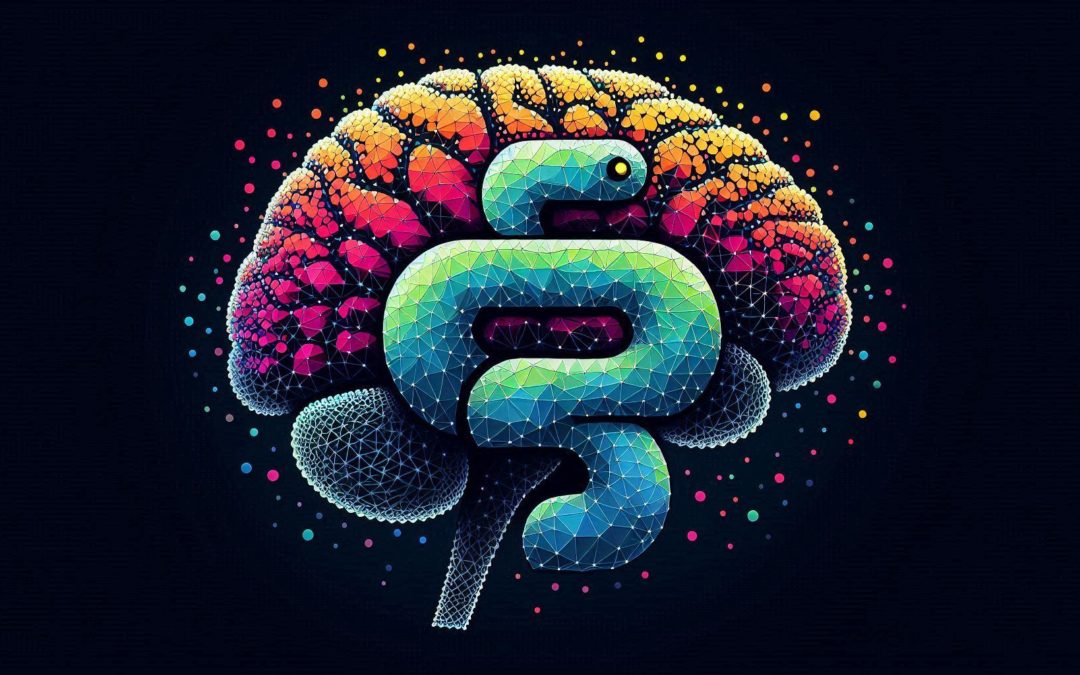
Artificial intelligence (AI) and machine learning (ML) have completely transformed sectors such as technology, healthcare, and finance, among many others.
With the increasing adoption of these technologies, organizations are looking for programming languages that facilitate the development of complex applications and algorithms.
Among all the options, Python has become the standard for AI and ML development. What does Python have that makes it so special for these areas?
In this article we will explore the main reasons that explain its hegemony, as well as other key languages and tools in this field.
Python’s popularity in AI and ML
One of the main reasons why Python has achieved a dominant position in AI and ML is its ease of use and flexibility.
Developing artificial intelligence applications can be an extremely complex and time-consuming task, but Python offers a vast ecosystem of libraries and frameworks that significantly reduce both the time and difficulty of implementing solutions.
A robust ecosystem of libraries and frameworks
Python has a large number of libraries that simplify common tasks in AI and ML, making it a more efficient option compared to other languages. Among the most popular libraries for ML are:
- Scikit-learn: Provides implementations of machine learning algorithms such as linear regression, logistic regression, and support vector machines (SVM).
- TensorFlow and PyTorch: These are advanced AI frameworks used to create deep neural networks. Both are used in deep learning projects and processing large volumes of data.
- Keras: A high-level framework designed to facilitate the creation of neural network models quickly and with fewer lines of code.
- NumPy, Pandas and Seaborn: Fundamental tools for data manipulation and visualization, crucial elements in the development of AI models.
These libraries not only offer out-of-the-box implementations, but are also well-documented and highly efficient, allowing developers to focus more on business logic and less on technical details.
Ease of learning and readability of the code
Python’s simple and readable syntax system is another key reason for its popularity. Unlike more complex languages, Python resembles everyday language (in English), making it easier to read and write the code.
Additionally, Python avoids the use of square brackets and adopts an indentation-based structure, which improves code clarity and reduces the margin of error.
This simplicity is especially useful for those new to AI programming, as they can focus on algorithmic concepts without getting bogged down in syntactic complications.
On the other hand, this ease is not at odds with power. Despite its simplicity, Python is an extremely versatile language and adaptable to different levels of complexity, making it an ideal option for both beginners and experts in AI and ML.
You do not need to recompile the code
One of the advantages most appreciated by developers is that Python does not require recompiling the code after making changes. The reason is that Python is an interpreted language.
Instead of compiling the source code to machine code before running it, Python translates the source code to an intermediate format called bytecode. This bytecode is interpreted by the Python Virtual Machine (PVM) at runtime.
This provides flexibility and saves time as developers can tweak their code and see the results immediately.
This ability to quickly iterate over code facilitates experimentation, which is crucial in AI and ML, where algorithms must be tweaked and tested repeatedly.
Cross-platform support and the Python community
Because bytecode is platform independent, the same Python code can run on different operating systems. Therefore, Python is a cross-platform language.
This means that developers can run their code on various operating systems such as Windows, macOS, and Linux without requiring major modifications.
This feature is especially important in development teams that work in diverse environments.
Additionally, Python has a large global community of developers who constantly contribute to the growth of the language.
This community is an invaluable resource, providing technical support, educational resources, and new libraries that make working in AI and ML even easier.
For developers, having access to this type of collaboration can make the difference between a successful project and a stagnant one.
Python philosophy: simplicity and pragmatism
One of the keys to Python’s success is its philosophy, which emphasizes simplicity, clarity, and practicality.
This is reflected in the document titled The Zen of Python, created by Tim Peters, which describes the principles that guide the development of the language. Some of the most relevant ideas for AI and ML include:
- Readability counts: Python values code that is easy to read and understand, making it easier to collaborate and maintain.
- Simple is better than complex: Python promotes simplicity in designing solutions, avoiding over-engineering.
- Better now than ever: Python’s philosophy encourages developers to be practical and make decisions based on immediate functionality.
Complementary tools in the AI ecosystem
In addition to the mentioned libraries, there are key tools in the Python ecosystem that make developing AI applications easier.
As an example we have Jupyter Notebooks, a popular tool for creating and executing code in Python, ideal for experimentation and visualization of results.
Within the Google development ecosystem we have Google Colab, which offers an environment similar to Jupyter with the advantage of allowing the use of cloud resources, and interacting with the Gemini API.
Finally we have Anaconda, a Python distribution that makes it easy to install specialized libraries for AI and ML, in addition to managing virtual environments.
The glue that holds AI together
Although the cores of many AI and deep learning algorithms are written in low-level languages such as C++ or CUDA to make the most of the hardware, Python acts as the “glue” that holds the entire AI ecosystem together.
While there are other languages that offer advantages in specific areas, Python strikes the perfect balance between ease of use, efficiency, and flexibility, making it ideal for AI projects of any size.
The AI and ML community continues to evolve, and while Python is currently the standard, the future could bring new languages or tools that complement or even replace some of its current uses.
However, for now, Python remains the preferred choice for most AI developers.
This post is also available in: