
The world of Bitcoin mining has seen numerous changes over the years, from price fluctuations to regulatory changes.
One of the most significant challenges has been the halving of block rewards, known as halving, which significantly reduces miners’ income.
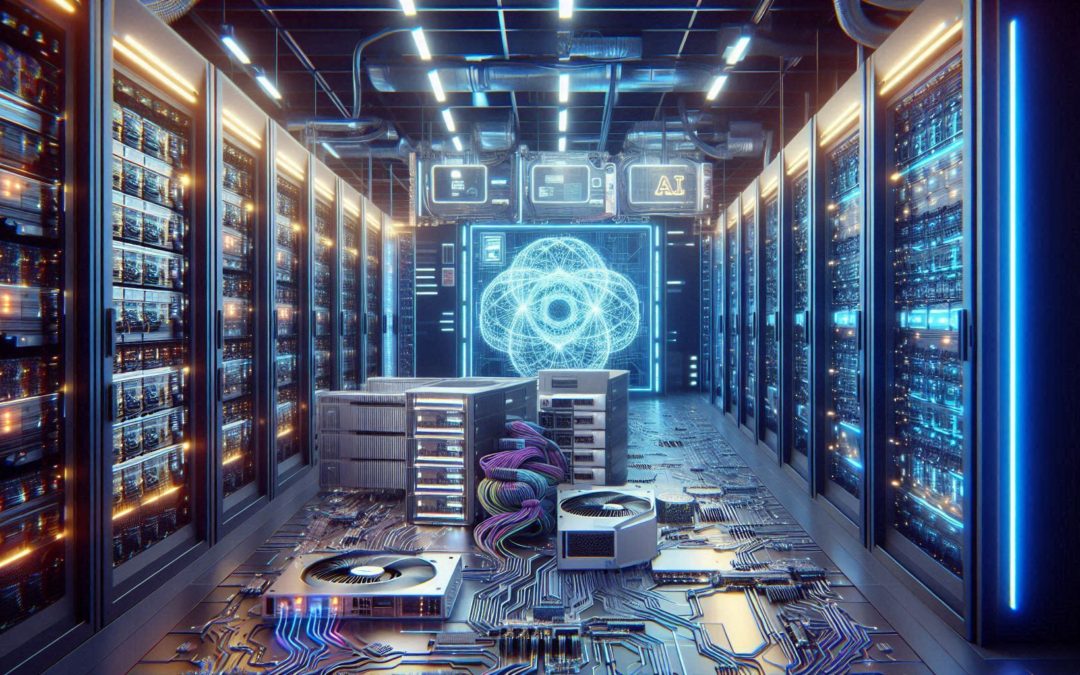
In response to these challenges, many miners have begun to diversify their operations, and one of the most notable emerging trends is the adoption of artificial intelligence (AI) hardware to supplement their income.
Below, we explore how large Bitcoin mining companies are making this transition and the benefits they hope to reap.
The halving crisis and price stagnation
The Bitcoin halving, which occurs approximately every four years, halves the reward miners receive for adding a new block to the blockchain. In April 2024, the reward was reduced from 6.25 BTC to 3,125 BTC per block.
Reducing the number of new bitcoins being issued helps control cryptocurrency inflation. By limiting supply, halving helps keep Bitcoin scarce, which can help preserve its value over time.
In theory, the reduction in profitability should be offset by an increase in the price of Bitcoin, due to induced scarcity. This is precisely what happened in the last halving of 2020, but the same does not seem to be happening this time.
Bitcoin prices have consistently remained between USD$60,000 to USD$70,000. Therefore, the reduction in the reward and the stagnation of the price are forcing miners to look for alternatives to maintain their economic viability.
Salvation: specialized AI hardware
Bitcoin mining can be volatile and its profitability depends largely on the price of the cryptocurrency. By diversifying their operations and adding AI capabilities, companies can reduce their exclusive dependence on revenue from Bitcoin mining.
Two of the largest crypto mining companies in the US, Hut 8 and BitDigital, have already begun generating revenue by implementing AI hardware.
Although currently only 3% of both companies’ revenues come from AI, this figure is expected to increase significantly towards the end of the year, reaching between 5% and 10%.
Core Scientific and Bitdeer are also exploring the use of AI hardware, suggesting this trend is gaining traction in the mining industry.
The data centers used for Bitcoin mining are already equipped with adequate infrastructure such as cooling systems and efficient power sources. This infrastructure can be easily adapted to host AI hardware.
The logic behind this diversification is clear: AI represents a lucrative opportunity, especially in a market where Bitcoin mining rewards have become less predictable and more competitive.
The economics of Bitcoin mining and AI
One of the main reasons miners are considering AI hardware is the promise of high returns. However, there are key differences between the economics of Bitcoin mining and AI that should be considered.
Bitcoin mining is all about getting the lowest possible energy costs. Miners compete to secure blocks using the least amount of energy, meaning sites with high energy costs are less competitive.
In contrast, AI and high-performance computing (HPC) may be more cost-effective in locations with higher energy costs due to the intensive nature of their operation.
AI and HPC generate considerable added value through their services, allowing them to charge higher rates to their clients. This can offset higher energy costs.
However, the capital investment required to implement AI hardware is significantly higher than that of Bitcoin mining.
Capital expenditures on AI are approximately 40 times that of Bitcoin mining. This includes not only the cost of hardware, but also redundancy systems and other infrastructure necessary to support large-scale AI operations.
Investors support diversification
Investors, particularly institutional ones, are showing growing interest in Bitcoin miners who are diversifying into AI.
According to Benchmark’s Mark Palmer, investors are looking for both the upside exposure to Bitcoin and the downside protection that diversification through AI can offer.
A notable example of this trend is the recent upgrade in Core Scientific’s rating by financier B. Riley, reflecting its recent expansion into high-performance computing.
This diversification not only improves the company’s revenue prospects, but also attracts investors interested in the long-term strength and adaptability of mining companies.
Challenges and inevitable skepticism
Despite the optimism, not everyone is convinced that the transition from Bitcoin mining to AI will be simple or even viable for all companies.
Will Foxley, co-founder of Blockspace Media, expressed skepticism about the ability of Bitcoin miners to adapt to the technical and operational demands of AI.
According to Foxley, many miners are talking about their AI capabilities without actually having the infrastructure to support them. Additionally, internal competition between Bitcoin mining and AI can present challenges.
Since Bitcoin mining and AI have different energy cost profiles and infrastructure requirements, companies must carefully balance their resources to maximize profitability, without compromising any operations.
Long-term perspectives
As the Bitcoin mining industry continues to evolve, we are likely to see more companies adopting AI as a way to diversify their income and mitigate the risks associated with cryptocurrency market volatility.
Adaptation and innovation will be key to survival and growth in this dynamic environment.
In the long term, miners who manage to effectively balance their Bitcoin operations with the implementation of AI hardware are likely to position themselves as leaders in the industry.
The ability to adapt to emerging technological and economic trends will be crucial to maintaining competitiveness and ensuring profitability in an increasingly challenging market.
This post is also available in: